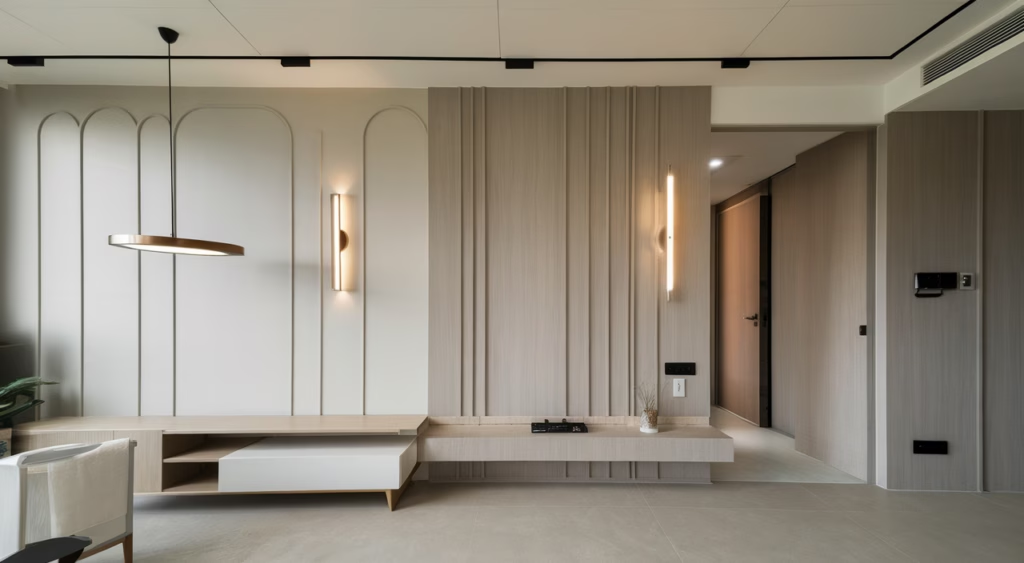
As licensed electrical contractors with years of boots-on-the-ground experience in Singapore, particularly within the unique context of HDB flats, we understand that electrical works can seem daunting. For HDB flat owners in Singapore, ensuring your electrical systems are safe, compliant, and efficient is not just about convenience; it is a critical aspect of homeownership and well-being. From minor repairs to major renovations, every electrical alteration within your HDB flat must adhere to strict guidelines set by the authorities, primarily the Energy Market Authority (EMA) and the Housing & Development Board (HDB).
This comprehensive guide is designed to be your go-to resource, shedding light on the essential aspects of electrical works Singapore HDB. We aim to demystify the processes, clarify regulations, and provide you with actionable insights from a professional perspective. Our goal is to equip you with the knowledge to make informed decisions, whether you are planning a simple power point installation or a complete rewiring project, ensuring your home remains a safe and functional sanctuary.
What Are the Key Considerations for Electrical Permit Application for HDB Flats?
The process of undertaking any significant electrical work in your HDB flat invariably begins with understanding and, more often than not, securing an electrical permit. This critical step ensures that all planned modifications or installations comply with Singapore’s robust electrical safety standards and HDB’s specific guidelines, safeguarding both your property and its occupants. Neglecting this crucial initial phase can lead to safety hazards, non-compliance issues, and potentially costly rectification works down the line. It is our professional duty to guide you through this, making sure you are aware of the prerequisites and necessary documentation for a smooth application process.
Why Electrical Works are Important for HDB Flats
For every HDB flat owner, the electrical system is the lifeblood of your home. It powers everything from your essential appliances to your smart home devices, lighting up your living spaces and enabling communication. But beyond convenience, the integrity and compliance of your electrical works hold profound importance, impacting safety, property value, and adherence to local regulations. Understanding this significance is the first step towards responsible homeownership.
Ensuring Safety and Preventing Hazards
The primary reason for meticulous attention to electrical works Singapore HDB is safety. Faulty wiring, overloaded circuits, or substandard installations are not just inconveniences; they are serious fire hazards and can lead to electrical shocks, endangering lives and property. HDB flats, being part of a larger interconnected network of homes, require an even higher degree of diligence. A problem in one unit could potentially affect others, underscoring the collective responsibility. Regular maintenance and professional installations are critical in preventing such catastrophic events.
Compliance with Singapore Regulations
Singapore has some of the most stringent electrical safety standards globally, enforced by the Energy Market Authority (EMA) and aligned with the Code of Practice for Electrical Installations (CP5). For HDB flats, these regulations are further supplemented by HDB’s specific renovation guidelines. Any electrical work, particularly those involving modifications to the main distribution board, rewiring, or significant load increases, must be carried out by a Licensed Electrical Worker (LEW) and often requires an HDB electrical permit application. Non-compliance can result in fines, forced rectification, and invalidation of home insurance in the event of an electrical incident. It is about more than just following rules; it is about upholding a standard of safety and quality that benefits everyone.
Optimising Energy Efficiency and Cost Savings
Modern electrical works also play a pivotal role in energy efficiency. Outdated wiring, inefficient appliances connected to poorly designed circuits, or improper installations can lead to significant energy wastage and higher utility bills. A professionally designed and installed electrical system ensures optimal power distribution, minimises energy loss, and supports the efficient operation of your appliances. Upgrading your electrical infrastructure, for instance, to accommodate energy-saving LED lighting or high-efficiency air-conditioners, can lead to substantial long-term cost savings and contribute to environmental sustainability. This aspect of electrical maintenance HDB is often overlooked but provides tangible benefits.
Supporting Modern Lifestyle and Technology
Our homes today are hubs of technology, demanding reliable and robust electrical systems. From multiple charging points for mobile devices to dedicated circuits for high-power kitchen appliances and sophisticated home entertainment systems, the electrical demands of an HDB flat have evolved significantly. Ensuring your electrical infrastructure can safely and reliably support these modern needs without overloading or frequent trips is crucial. This proactive approach prevents inconvenience and ensures that your HDB flat is truly future-ready, accommodating smart home integrations and future technological advancements.
Getting Started with Electrical Permit Application
Embarking on any significant electrical work in your HDB flat requires navigating the permit application process. This step is not merely bureaucratic; it is a fundamental safeguard designed to ensure that all electrical installations meet the stringent safety and technical standards mandated in Singapore. As your trusted electrical contractors, we are here to guide you through the intricacies of the HDB electrical permit application, ensuring you understand each phase and can proceed with confidence.
When is an Electrical Permit Required?
Not all electrical works necessitate a permit, but most significant modifications do. Generally, an electrical permit, applied for through EMA, is required for:
- Any alteration or addition to existing electrical installations that involves modifying the main distribution board (DB).
- The installation or replacement of new electrical points, circuits, or appliances that exceed a certain current rating (typically 15 Amperes for single-phase installations, or any new three-phase installations).
- Complete or partial rewiring of your HDB flat.
- Increases in the total electrical loading capacity of your flat.
It is always prudent to consult with a Licensed Electrical Worker (LEW) who can accurately assess your planned works against current regulations and advise on the necessity of a permit. This initial consultation is vital in preventing misunderstandings and ensuring electrical compliance regulations Singapore are met from the outset.
The Role of a Licensed Electrical Worker (LEW)
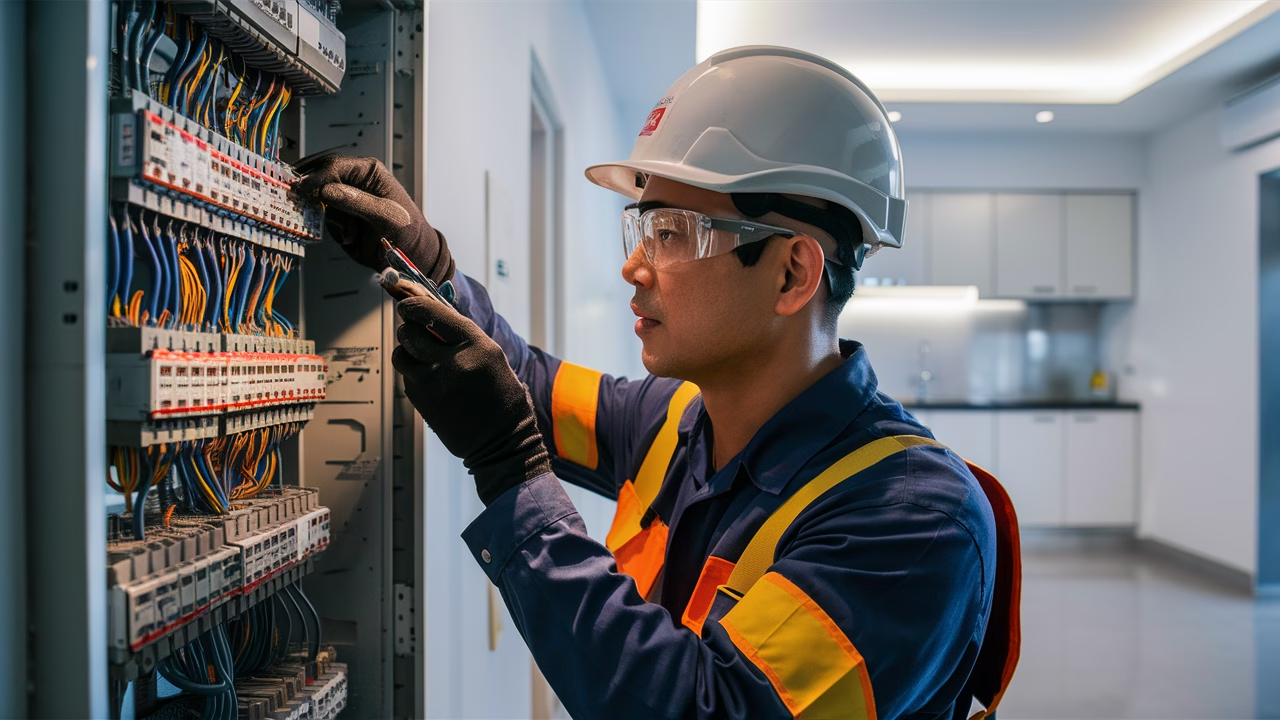
An LEW is indispensable in the permit application process. Only an LEW is authorised to apply for an electrical permit from EMA on your behalf. Their responsibilities include:
- Assessment and Design: Evaluating your existing electrical system, understanding your proposed modifications, and designing a safe and compliant electrical plan.
- Application Submission: Preparing and submitting all necessary documents to EMA, including detailed electrical drawings and load calculations.
- Supervision and Certification: Overseeing the actual electrical works to ensure they are carried out according to approved plans and safety standards. Upon completion, the LEW will inspect and test the installation, then issue a Certificate of Compliance (COC) to EMA, certifying that the work meets all regulatory requirements. This COC is a crucial document for your records and for future reference.
Steps in the HDB Electrical Permit Application Process
- Engage an LEW: This is the first and most crucial step. A qualified LEW will discuss your project, conduct an initial assessment, and provide a scope of work.
- Plan and Design: The LEW will prepare detailed electrical plans, schematics, and load schedules. These documents outline the proposed changes, circuit layouts, and the new electrical loading.
- HDB Application (if applicable): For certain major renovations involving electrical works, you may also need HDB’s direct approval for the renovation itself, alongside the EMA electrical permit. Your LEW can advise on this. Referencing HDB electrical renovation guidelines will be key here.
- EMA Permit Application: The LEW will submit the permit application to EMA with all supporting documents, including the plans and specifications.
- Approval and Work Commencement: Once EMA approves the permit, the electrical works can commence. It is critical that works are carried out strictly in accordance with the approved plans. Any deviations must be approved by EMA.
- Inspection and Testing: Upon completion, the LEW will conduct thorough inspections and tests to ensure the installation is safe and compliant.
- Certificate of Compliance (COC): If the installation passes all tests, the LEW will issue and submit the COC to EMA, officially closing the permit and certifying the work.
This systematic approach, guided by a licensed professional, ensures that all electrical works Singapore HDB are conducted safely, legally, and to the highest standards, giving you peace of mind.
Common Electrical Works in HDB Flats
As HDB flat owners, you will encounter various electrical needs throughout your tenure, from routine maintenance to significant upgrades. Understanding the scope of common electrical works HDB flats require helps you anticipate needs, budget effectively, and communicate clearly with your chosen electrical professional. Here, we outline some of the most frequent types of electrical works we undertake in HDB properties.
Power Point Installation and Relocation
One of the most frequent requests we receive is for the installation of new power points or the relocation of existing ones. With the increasing number of electrical devices in modern homes, sufficient and strategically placed power points are essential. This work involves extending circuits, ensuring proper earthing, and installing new outlets in convenient locations. It is crucial that new power points are installed by an LEW to ensure they are properly wired to the distribution board and do not overload existing circuits, which could lead to fire hazards.
Lighting Installation and Upgrades
From ceiling lights and downlights to accent lighting and smart lighting systems, the installation and upgrading of lighting fixtures are fundamental electrical works. This includes ensuring proper wiring, switch compatibility, and safe mounting. Many HDB owners also opt for energy-efficient LED lighting upgrades, which require professional installation to ensure correct wiring and transformer usage, maximising both safety and energy savings.
Circuit Breaker and Distribution Board Upgrades
The distribution board (DB), commonly known as the circuit breaker box, is the heart of your HDB flat’s electrical system. Over time, or with increased electrical load due to new appliances, your existing DB might need upgrading or replacement. This could involve replacing older fuse boxes with modern Miniature Circuit Breakers (MCBs) or Residual Current Circuit Breakers (RCCBs) for enhanced safety, or upgrading the entire board to accommodate a higher electrical capacity. This work is highly critical and must only be performed by a Licensed Electrical Worker due to its direct impact on the safety and functionality of your entire electrical system.
Rewiring and Cable Replacement
For older HDB flats, or those undergoing extensive renovation, complete or partial rewiring is often necessary. Over time, electrical cables can degrade, become brittle, or simply not meet modern load demands. Rewiring involves replacing old, worn-out cables with new, compliant ones, ensuring proper insulation, gauging, and routing. This is one of the most extensive electrical works Singapore HDB flats might undergo and requires meticulous planning and execution to ensure long-term safety and reliability. It almost always requires an EMA permit and HDB renovation approval.
Water Heater and Air-Conditioner Installation
Installing high-power appliances like instant water heaters, storage water heaters, or air-conditioning units often requires dedicated electrical circuits to prevent overloading. These installations typically involve running new heavy-duty cables from the DB and installing appropriate circuit breakers. It is essential that these are carried out by an LEW or a qualified technician supervised by an LEW, ensuring the electrical capacity of your flat can safely handle the increased load without compromising safety or triggering frequent trips.
Electrical Inspections and Troubleshooting
Beyond installations, routine electrical inspections and troubleshooting are also common electrical works HDB flats owners request. This includes identifying the cause of tripped circuit breakers, flickering lights, power outages, or faulty outlets. An LEW can perform diagnostic checks, identify underlying issues, and recommend appropriate repairs, ensuring the continuous safe operation of your electrical system. Regular electrical maintenance HDB can often prevent minor issues from escalating into major problems.
Safety Tips for Electrical Works
Electrical safety is paramount, especially when dealing with electrical works Singapore HDB flats. As licensed professionals, we constantly emphasise that electricity can be dangerous if not handled correctly. While some minor tasks might seem simple, understanding and adhering to strict safety protocols is non-negotiable. This section explicitly fills the competitor gap by providing detailed and actionable safety tips for HDB flat owners, empowering you to identify risks and act responsibly.
Always Engage a Licensed Electrical Worker (LEW)
This cannot be stressed enough: for any significant electrical work, particularly those requiring a permit or involving the main supply, *always* engage an LEW. DIY attempts for complex tasks are not only illegal but extremely dangerous. An LEW possesses the expertise, tools, and regulatory knowledge to perform work safely and to code, ensuring your home meets electrical safety regulations HDB and EMA standards. Do not compromise on this fundamental safety principle.
Understand Your Distribution Board (DB)
Familiarise yourself with your HDB flat’s distribution board. Know where it is located and how to switch off the main supply in an emergency. Understand which circuit breaker controls which part of your home. Labeling your circuit breakers clearly can be a lifesaver, allowing you to quickly isolate power to a specific area if an issue arises. This basic knowledge empowers you to react effectively in a power-related incident.
Never Overload Electrical Outlets
Overloading an electrical outlet by plugging in too many high-power appliances can lead to overheating, tripped circuit breakers, or even fires. Be mindful of the wattage requirements of your appliances and use power strips with surge protection for multiple low-power devices. If you constantly experience tripped breakers in a specific area, it is a clear sign that the circuit is overloaded or there is an underlying fault. Consult an LEW immediately instead of repeatedly resetting the breaker or using extensions for high-draw appliances.
Inspect Cables and Plugs Regularly
Periodically check all power cords, plugs, and appliance cables for signs of wear and tear. Frayed wires, cracked insulation, or exposed conductors are serious hazards. Replace damaged cords immediately. Ensure plugs fit snugly into outlets; loose plugs can generate heat and cause arcing. Never force a plug into an outlet it doesn’t fit into. This proactive inspection is a simple yet effective electrical safety tips you can implement.
Keep Electrical Appliances Away from Water
Water and electricity are a deadly combination. Always ensure that electrical appliances are kept away from sinks, bathtubs, and other sources of water. Never touch electrical appliances with wet hands. In bathrooms and kitchens, ensure that outlets are Residual Current Circuit Breaker (RCCB) protected, which will trip the power quickly in case of an earth leakage, significantly reducing the risk of electrocution.
Properly Use and Maintain Extension Cords
Extension cords are designed for temporary use, not as permanent wiring solutions. Avoid running extension cords under carpets, through doorways, or in high-traffic areas where they can be damaged or become tripping hazards. Always use extension cords that are rated for the power load of the appliances connected. Never daisy-chain multiple extension cords together, as this significantly increases the risk of overheating and fire. Regular checks for damage are part of good electrical safety tips.
Childproof Your Electrical Outlets
If you have young children, childproofing electrical outlets is essential. Use safety caps on unused outlets to prevent curious fingers or objects from being inserted. Teach children about the dangers of electricity from an early age and ensure they understand not to play with outlets or electrical cords.
Be Aware of Hot Spots and Burning Smells
Any electrical outlet, switch plate, or appliance that feels unusually hot to the touch, or emits a burning smell, is an immediate cause for concern. These are strong indicators of an electrical fault, short circuit, or overloaded circuit. If you notice any of these signs, immediately switch off the power to that circuit at the DB and call an LEW. Do not ignore these warnings; they can escalate rapidly into serious hazards.
Know Your Electrical Capacity
HDB flats typically come with a standard electrical load capacity (e.g., 30 Ampere or 40 Ampere). Understanding your flat’s capacity helps you plan for new appliance installations and renovations. Exceeding this capacity without upgrading your electrical infrastructure through proper channels and with LEW supervision is dangerous and against regulations. Always check your service line fuse rating and the main circuit breaker rating.
Regular Electrical Inspections
Consider scheduling periodic electrical inspections by an LEW, especially for older HDB flats or after significant renovations. A professional inspection can identify hidden issues, assess the condition of wiring, and ensure compliance with the latest electrical safety regulations HDB and EMA standards. This proactive approach to electrical maintenance HDB can prevent future problems and ensure the long-term safety of your home.

Hiring a Professional for Electrical Works
While understanding electrical works Singapore HDB is crucial for any flat owner, recognising when to call in a professional is equally, if not more, important. For complex, high-risk, or permit-requiring tasks, the expertise of a Licensed Electrical Worker (LEW) or a reputable electrical contractor is indispensable. This section addresses the competitor gap by providing comprehensive insights into selecting and engaging professional electrical services Singapore, ensuring you make informed and safe choices for your home.
Why Professional Help is Essential
Engaging a professional for your electrical works offers several key benefits:
- Safety Assurance: Professionals are trained to handle electricity safely, minimising risks of shocks, fires, and accidents. They adhere to strict safety protocols and use appropriate safety gear.
- Regulatory Compliance: Only an LEW can issue the necessary Certificate of Compliance (COC) for major works, ensuring your installation meets EMA and HDB regulations. This protects you from fines and ensures insurance validity.
- Expertise and Experience: Professionals possess in-depth knowledge of electrical systems, troubleshooting skills, and experience with various installation types. They can diagnose problems accurately and provide effective, long-lasting solutions.
- Quality Workmanship: Professional work ensures installations are durable, reliable, and aesthetically pleasing. They use quality materials and proper techniques, preventing premature failures.
- Insurance and Warranty: Reputable contractors typically offer warranties on their work and carry appropriate insurance, providing you with financial protection in case of any issues arising from their installation.
What to Look for in a Professional Electrical Contractor
Choosing the right contractor for your professional electrical services Singapore can be challenging. Here’s what we recommend you look for:
- Licensed Electrical Worker (LEW) Accreditation: This is non-negotiable. Ensure the individual or firm you hire has a valid LEW license issued by EMA. You can verify this through the EMA’s public register. This guarantees they have met the rigorous standards for competence and safety.
- Experience and Specialisation: Look for contractors with specific experience in HDB flats. They will be familiar with HDB regulations, common challenges in HDB layouts, and the typical electrical infrastructure found in these homes. Specialisation indicates a deeper understanding of your specific needs.
- Reputation and References: Seek recommendations from friends, family, or online reviews. A reputable contractor will have positive feedback regarding their reliability, quality of work, and customer service. Ask for references and, if possible, inspect past work.
- Transparent Quotations: A professional contractor will provide a detailed, itemised quotation that clearly outlines the scope of work, materials to be used, labour costs, permit fees (if applicable), and any other charges. Beware of vague or unusually low quotes, which might indicate hidden costs or substandard materials.
- Insurance: Ensure the contractor has adequate liability insurance. This protects you from financial responsibility in case of accidental damage to your property or injury to workers during the project.
- Warranty on Workmanship: A confident professional will offer a warranty on their workmanship, typically ranging from a few months to a year. This provides peace of mind that they stand by the quality of their installations.
- Clear Communication: Choose a contractor who communicates clearly, explains the work in understandable terms, and is responsive to your questions and concerns.
Vetting and Due Diligence
Before committing to any contractor, take the time for proper vetting:
- Interview Multiple Contractors: Get quotes and proposals from at least three different LEWs or contractors. This allows you to compare prices, scopes of work, and professional demeanour.
- Check Credentials: Always ask to see their LEW license and company registration. Verify the LEW’s status with EMA.
- Clarify Scope of Work: Ensure the contractor’s proposal explicitly covers everything you need, from initial assessment and permit application to final testing and certification. Discuss any potential challenges or additional costs upfront. This is where insights on professional electrical services in Singapore become crucial, as understanding the full scope avoids surprises.
- Understand Payment Terms: Clarify the payment schedule, deposit requirements, and final payment conditions. Avoid paying the full amount upfront.
- Review Contract: Read the contract thoroughly. It should detail the project timeline, responsibilities of both parties, warranty information, and dispute resolution mechanisms.
By diligently following these steps, you can confidently engage professional electrical services Singapore that provide safe, compliant, and high-quality electrical solutions for your HDB flat. Remember, investing in a qualified professional is an investment in the safety and longevity of your home’s electrical system, saving you potential headaches and costs in the long run.
TL;DR
Navigating electrical works Singapore HDB flats involves crucial steps to ensure safety and compliance. For HDB flat owners, understanding the process for an electrical permit application for HDB flats is fundamental, as most significant electrical modifications require approval from the Energy Market Authority (EMA) and often adherence to electrical safety regulations HDB. This involves engaging a Licensed Electrical Worker (LEW) who will design, apply for, supervise, and certify the works, culminating in a Certificate of Compliance (COC).
- Importance: Proper electrical works are vital for safety, preventing hazards like fires and shocks, and ensuring electrical compliance regulations Singapore. They also contribute to energy efficiency and support modern technological demands within your home.
- Common Works: These include power point installations, lighting upgrades, distribution board enhancements, full or partial rewiring, and installations for high-power appliances like water heaters and air-conditioners. Regular electrical maintenance HDB is also key.
- Safety Tips: Always hire an LEW for major tasks. Familiarise yourself with your DB. Never overload outlets. Regularly inspect cables for damage. Keep electricals away from water. Use extension cords judiciously. Childproof outlets and be vigilant for hot spots or burning smells.
- Hiring Professionals: For professional electrical services in Singapore, choose an LEW-accredited contractor with HDB-specific experience, a strong reputation, transparent quotes, and insurance. Vet multiple options, clarify the scope, and ensure a clear contract to guarantee quality and safety, aligning with HDB electrical renovation guidelines.

