
Can You Replace Cabinets Without Removing the Countertop?
Yes, you can absolutely replace kitchen cabinets without removing the countertop—when done carefully with proper planning. This cabinet renovation approach can save you significant time, money, and mess by keeping your existing countertop intact throughout the process.
TL;DR:
- ✅ You can replace cabinets without removing countertops: Safe, efficient, and budget-friendly with careful planning.
- 🔧 Tools matter: Use jacks, braces, and proper support systems to secure the countertop during removal.
- 🎯 Install with precision: Proper alignment and secure mounting are essential for long-term success.
- 🔥 Pro tips: Learn how to select compatible cabinets and avoid the most common kitchen upgrade mistakes.
Preparing for Cabinet Replacement
1.1 Assessing Your Current Cabinets

Before starting your kitchen cabinets replacement project, conduct a thorough inspection of your current setup. Are the cabinets simply outdated, or is their structural integrity compromised? If you discover warped frames or water damage, you’re looking at a more complex renovation.
Examine how your cabinets connect to the countertop. Is the countertop resting solely on the cabinet structure, or are there independent brackets providing support? This assessment is crucial for your DIY kitchen upgrade success.
Here’s what often goes wrong: homeowners begin removing cabinets without realizing their countertop is cantilevered—which can cause expensive cracks or complete breakage. If you’re uncertain about the structural setup, we recommend consulting a professional carpenter to evaluate proper load distribution.
1.2 Choosing the Right Replacement Cabinets
Select new cabinets that closely match your original dimensions for seamless integration. This isn’t just about visual alignment—it directly impacts how well your countertop will resettle after installation.
Kitchen cabinets come in stock, semi-custom, or fully custom varieties. For projects where you’re keeping the countertop, stock cabinets with standard depths and heights tend to be simpler to install and align properly.
Choose materials that match or exceed your old cabinets’ durability. Consider plywood construction over particle board, especially if moisture damage contributed to your renovation decision. Match the toe kicks and mounting heights to maintain seamless alignment with your existing countertop.
Securing the Countertop During Cabinet Removal
2.1 Tools and Materials Needed
This kitchen cabinet renovation requires precision—like performing surgery on your kitchen. Here’s your essential toolkit for replacing cabinets without removing countertop:
- Cabinet jack supports or adjustable jacks
- Wooden or metal braces for additional support
- Protective padding or foam sheets
- Screwdrivers, pry bars, and impact drivers
- Level and measuring tape for accuracy
- Painter’s tape and markers for alignment reference
Position your jacks underneath the countertop at regular intervals before removing any lower cabinet. Think strategically about weight distribution—proper support near every seam or joint is essential, especially for stone countertops like quartz or granite.
2.2 Step-by-Step Process
- Clear the Countertop Completely: Remove all kitchen items, décor, and built-in appliances that might obstruct your work or add unnecessary weight.
- Install Jack Supports: Position them under the countertop as close to corners, seams, and load-bearing points as possible.
- Add Protective Padding: Place foam padding between jack tops and countertop undersides to prevent surface damage during your kitchen upgrade.
- Remove Cabinet Hardware: Carefully unscrew cabinets from walls and adjacent units, working slowly to avoid sudden countertop movement.
- Extract Cabinets Systematically: Work one unit at a time from side to side, immediately adjusting jack support as needed.
Pro tip: Never rush this process. Even slight imbalances can stress your countertop’s seams—and granite or quartz doesn’t forgive installation mistakes.
Installing New Cabinets Without Disrupting the Countertop
3.1 Proper Alignment and Mounting
With old cabinets removed and your countertop securely supported, you can focus on installing your replacement units. This stage determines the success of your entire kitchen cabinet renovation project.
Your new cabinets should mirror the exact dimensions of the originals. Verify height, width, and depth measurements before mounting to ensure perfect alignment with your existing countertop.
Test-fit each cabinet by positioning it carefully under the countertop, ensuring it slides smoothly into its predecessor’s footprint. Use a level and shims to compensate for any floor irregularities—common in older homes or uneven kitchen areas.
Secure each cabinet firmly to the wall and adjacent units. This distributes weight evenly and reinforces the structure supporting your countertop. Monitor countertop alignment continuously as you install each new base cabinet.
3.2 Finishing Touches and Clean-Up
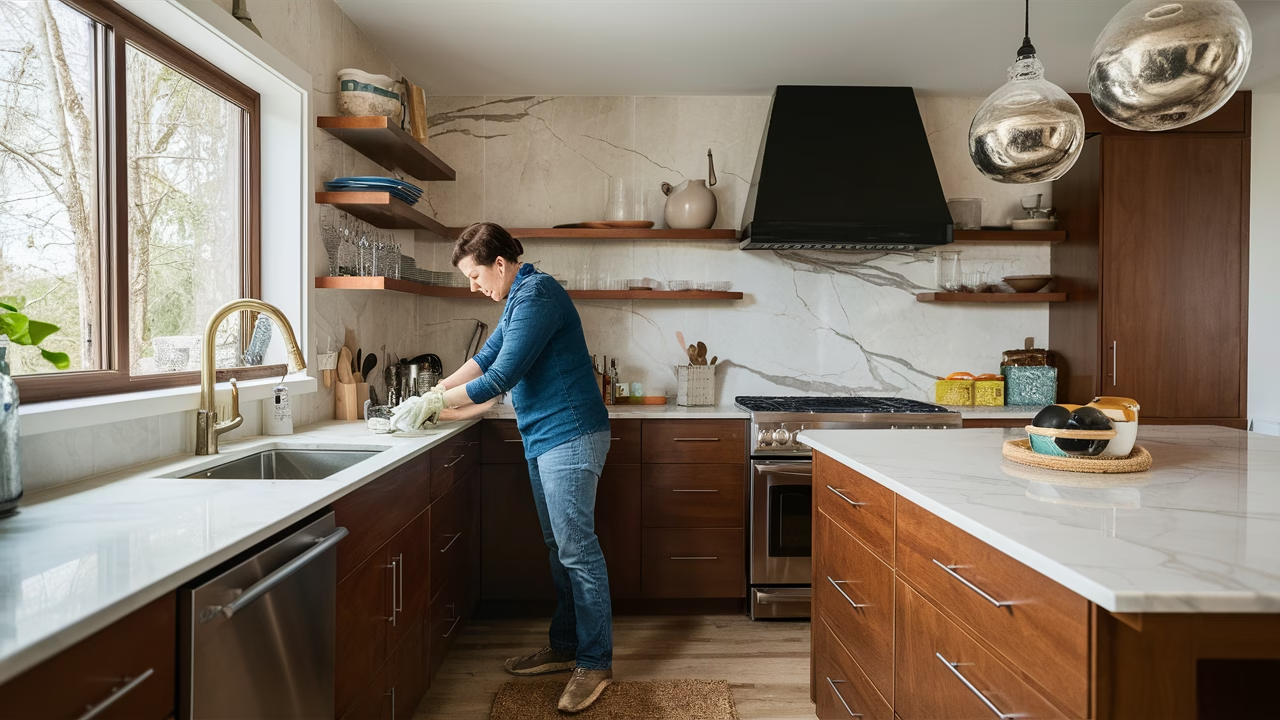
Once you’ve completed your kitchen cabinets replacement, slowly and carefully remove the jack supports beneath your countertop. Watch for any shifting—if movement occurs, stop immediately and recheck your cabinet alignment.
Complete your DIY kitchen upgrade by reattaching hardware, reinstalling appliances, and sealing the base frame connections. Add professional finishing touches like caulking cabinet edges and installing toe-kick panels for a polished appearance.
Kitchen Cabinet Replacement Cost Guide
| Option | Estimated Cost (SGD) | Details |
|---|---|---|
| Low-End (Stock cabinets) | $800 – $1,500 | Basic MDF stock cabinets, DIY approach |
| Mid-Range (Semi-custom) | $1,500 – $3,000 | Plywood cabinets, better finish, possible professional help |
| High-End (Custom) | $3,000 – $6,000+ | Custom-built cabinetry, professional installation, premium hardware |
Final Thoughts: Smart Kitchen Renovation Made Simple
If you love your countertop and want fresh, functional cabinets, replacing them without removing the top is a brilliant solution. With proper tools, thorough planning, and step-by-step precision, you can achieve professional results without the mess and expense of full countertop removal. Always assess your kitchen’s complexity honestly, know your DIY limits, and don’t hesitate to consult professionals when needed for the best kitchen cabinet renovation results.
Frequently Asked Questions: How to update a kitchen without changing countertops?
- Can I keep my granite countertop during cabinet replacement?
Yes, granite countertops can remain if properly supported with jacks during cabinet removal and installation. - Is cabinet replacement without removing the countertop safe?
Yes, provided the countertop is adequately braced and no sudden force is applied during removal. - Do I need custom cabinets to fit under an existing countertop?
Not necessarily. Stock or semi-custom cabinets can work as long as dimensions are matched closely. - What’s the biggest risk in this process?
Cracking or damaging the countertop from uneven support during removal or installation. - Should I hire a professional or DIY this?
If you’re confident with carpentry and measurements, DIY is possible. Otherwise, hire pros for safety and precision. - How long does it take to replace cabinets this way?
Usually between 2 to 4 days, depending on kitchen size and complexity. - Can I reuse old countertops if cabinets were damaged by leaks?
Possibly, but assess the counter’s structural integrity first. If water damage extends to the top, it may need replacement.

