Can you effectively reduce noise in your bedroom for better sleep?
As an Acoustic Consultant, I can confidently state that, yes, you absolutely can significantly reduce noise in your bedroom to cultivate a more peaceful environment conducive to better sleep. By strategically applying various soundproofing and noise reduction techniques, you can transform your personal space into a true sanctuary of quiet, shielding yourself from disruptive external and internal sounds.
1. Understanding the Importance of Soundproofing Your Bedroom
The quest to soundproof your bedroom isn’t merely about achieving silence; it’s about safeguarding your health and enhancing your quality of life. Noise pollution is an insidious intruder, often underestimated in its profound impact on our well-being. When we discuss how to reduce noise in your bedroom, we’re ultimately talking about an investment in your physical and mental health. My experience in acoustic consulting has repeatedly shown that even subtle, continuous background noise can have detrimental effects that extend far beyond simply keeping you awake at night.
A bedroom should be a haven, a place where the stresses of the day dissolve, and your body and mind can fully rejuvenate. Unfortunately, for many, this ideal is shattered by intrusive sounds. From the rumble of urban traffic, the drone of HVAC systems, the chatter of neighbors, or even internal household noises, these sounds can fragment your sleep, increase stress levels, and diminish your overall sense of peace. Implementing effective bedroom soundproofing tips is therefore not a luxury, but a necessity for optimal living.
1.1 The Effects of Noise on Sleep Quality
The science is clear: noise profoundly impacts sleep quality. Even when you are asleep, your brain continues to process sounds, leading to what’s known as “sleep fragmentation.” This doesn’t always mean waking up completely; often, it manifests as brief arousals you might not even remember, but which prevent you from achieving deeper, more restorative sleep stages. When we fail to achieve sufficient deep sleep and REM sleep, the consequences ripple through our entire day.
Chronic exposure to noise during sleep can lead to a host of health issues. These include increased heart rate and blood pressure, heightened stress hormone levels, and a compromised immune system. Over time, individuals often report increased irritability, difficulty concentrating, and impaired cognitive function – all direct results of a body and mind consistently deprived of quality rest. My role often involves helping clients understand that while they may “get used to” certain noises, their body is still reacting, and the cumulative stress response is still occurring.
Furthermore, poor sleep quality has been linked to an elevated risk of developing serious chronic conditions such as obesity, diabetes, and cardiovascular disease. Beyond physical health, the psychological toll is significant. Persistent sleep disturbances can exacerbate anxiety, contribute to depressive symptoms, and diminish overall mood and resilience. Therefore, soundproofing solutions for bedrooms are not just about comfort; they are a critical component of preventative health care, allowing your body and mind to truly disconnect, repair, and prepare for the demands of the waking hours.
2. Practical Tips for Soundproofing Your Bedroom
Now that we understand the profound importance of a quiet sleep environment, let’s delve into practical and actionable bedroom soundproofing tips. As an Acoustic Consultant, I always start with the easiest and most cost-effective solutions, as these often yield surprisingly significant results. The goal is to identify common sound transmission paths and strategically block or absorb noise. Many people wonder how to reduce noise in bedroom situations without extensive renovation, and these initial steps are often the answer.
Effective soundproofing is about creating barriers and minimizing vibrations. Think of sound like water; it will find the path of least resistance. Our first line of defense, therefore, is to plug those leaks. We want to apply sound-blocking materials and techniques to seal up any unintended openings that allow noise to infiltrate your personal space. These practical tips are designed for accessibility, allowing you to begin your journey towards a quieter bedroom with minimal fuss and expenditure.
2.1 Caulking and Sealing Cracks
This is arguably one of the most overlooked yet highly effective strategies for anyone looking to soundproof bedroom walls, windows, and doors. Air leaks are sound leaks. Even the smallest gaps around window frames, door jambs, electrical outlets, and baseboards can allow a surprising amount of noise to penetrate. These gaps act as direct conduits for airborne sound, carrying conversations, traffic noise, and other disturbances directly into your room. As an Acoustic Consultant, I often find that addressing these minute details provides an immediate, noticeable improvement.
- Windows: Inspect around your window frames. If you can see light coming through, or feel a draft, sound is definitely getting in. Use acoustic caulk (which remains flexible and creates a better seal than standard caulk) to seal any gaps between the frame and the wall. For a more robust solution, apply weatherstripping around the operable parts of the window. Window inserts, such as those made from acrylic or laminated glass, can create an additional air gap and significantly improve sound insulation without replacing the entire window.
- Doors: Doors are notorious sound culprits. The gaps around the perimeter of a closed door allow a significant amount of noise to pass. Install a door sweep at the bottom of your door to block sound coming from underneath. Apply weatherstripping (foam or rubber strips) around the sides and top of the door frame to create a tight seal when the door is closed. Ensure your door itself is solid-core, not hollow, as solid doors offer superior sound attenuation. If replacing the door isn’t an option, consider adding mass with acoustic panels or even a heavy blanket hung over the door on the inside.
- Outlets and Light Switches: These seemingly innocuous openings are direct breaches in your wall’s sound barrier. Remove the cover plates and fill the cavity with acoustical sealant or specialized sound-absorbing foam inserts. Be extremely careful when working near electrical components and ensure power is off.
- Baseboards and Vents: Check for gaps where baseboards meet the wall or floor, and seal them with caulk. While HVAC vents need to remain open, ensuring they are properly sealed to the ductwork and considering acoustic duct lining can help reduce sound transfer through the ventilation system.
By diligently sealing these tiny breaches, you significantly improve the overall acoustic integrity of your bedroom, taking a major step towards effective noise reduction.
2.2 Acoustic Panels and Soundproof Curtains
Once you’ve sealed the obvious air leaks, the next step in effective bedroom soundproofing tips often involves addressing sound reflection and absorption within the room. This is where acoustic treatment comes into play, utilizing specialized materials designed to either block sound or soak it up. The aim here is to reduce reverberation and dampen airborne noise before it reaches your ears, helping to reduce noise in bedroom environments.
- Acoustic Panels: These are not just for recording studios! Acoustic panels are specifically designed to absorb sound waves, reducing echo and reverberation within a room. Made from dense, porous materials like mineral wool or fiberglass, covered in fabric, they convert sound energy into heat. Strategically placing these panels on walls (especially parallel walls to prevent flutter echo), ceilings, or even freestanding can dramatically improve the acoustic comfort of your bedroom. They are particularly effective for reducing mid to high-frequency sounds. For DIY enthusiasts, panels can be constructed using rigid insulation boards wrapped in an aesthetically pleasing fabric. Consider placing them at first reflection points – areas where sound from a noise source (like a window or door) would bounce directly to your listening position (your bed).
- Soundproof Curtains: These are much more than just heavy drapes. Soundproof curtains are typically made from multiple layers of dense, heavy fabric, sometimes incorporating a sound-blocking material like mass loaded vinyl (MLV) within their layers. Their primary function is to block or absorb airborne sound trying to enter through windows. They also help to absorb sound within the room, much like acoustic panels. For maximum effectiveness, soundproof curtains should extend beyond the window frame on all sides and ideally touch the floor, creating a tight seal. Hanging them on a robust rod that sits close to the wall can further enhance their sound-blocking capabilities. While they may not completely eliminate all noise, they can significantly dampen street noise, neighborly sounds, and other external disturbances, contributing to excellent noise reduction for better sleep. When selecting, look for terms like “thermal blackout,” “sound dampening,” or “acoustic curtains” rather than just “heavy curtains,” as density is key.
These solutions provide both functional sound control and can be integrated aesthetically into your bedroom design, proving that soundproofing solutions for bedrooms can be both effective and visually appealing.
3. Lifestyle Changes for a Quieter Bedroom
While structural and material-based soundproofing solutions for bedrooms are crucial, cultivating a quieter bedroom environment also involves adjusting certain habits and introducing ambient sound-masking elements. As an Acoustic Consultant, I often advise clients that a holistic approach, combining physical soundproofing with mindful lifestyle adjustments, yields the best results for how to reduce noise in bedroom scenarios. These changes are about controlling the soundscape of your immediate sleeping environment and can be incredibly effective when combined with other sound-blocking efforts.
Think of it as creating an active sound barrier. Instead of passively waiting for external noises to cease, you proactively introduce sounds that can either mask or help your brain disregard disruptive elements. This is particularly useful for persistent, low-level noises that might be difficult to completely eliminate through physical soundproofing alone. Furthermore, integrating these lifestyle elements can complement your efforts to soundproof bedroom walls and windows, creating a comprehensive strategy for peaceful sleep.
3.1 Using White Noise Machines and Fans
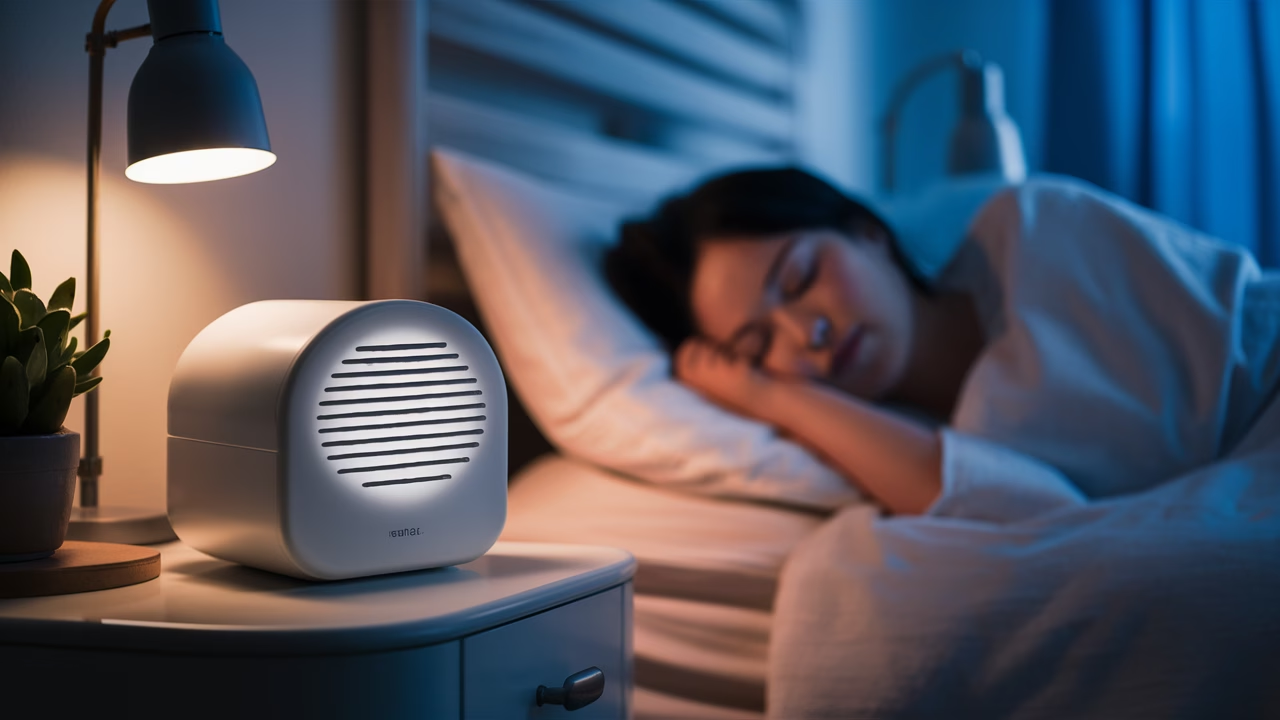
White noise machines and even simple fans are powerful tools in managing your bedroom’s sound environment. They operate on the principle of sound masking, which doesn’t eliminate noise but rather creates a consistent, broadband sound that effectively covers up sudden or intermittent noises that might otherwise jar you awake. The gentle, continuous hum helps to create a more uniform acoustic backdrop, making other sounds less noticeable or intrusive. This is one of the most accessible and immediate bedroom soundproofing tips you can implement.
- How White Noise Works: White noise encompasses a wide range of frequencies at a uniform intensity. This consistent background hum helps to “smooth out” the auditory landscape. When a sudden noise (like a car horn or a door slamming) occurs, the contrast between the ambient sound and the intrusive noise is significantly reduced. Your brain finds it harder to pinpoint and react to the disruptive sound because it’s blended into the white noise. It’s like trying to hear a whispered secret in a busy coffee shop versus a quiet library.
- Types of Sound: Beyond pure white noise (which can sometimes sound like static), many machines offer “colored” noises like pink noise (deeper, more natural, similar to rainfall or rustling leaves) or brown noise (even deeper, like a strong waterfall). Nature sounds (ocean waves, rain, forest ambiance) are also popular for their calming effects. Experiment to find what works best for you.
- Fans as a Solution: A simple fan, even without a specific “white noise” setting, can serve a similar purpose. The consistent whirring sound provides an effective masking effect, particularly for lower-frequency disturbances. Plus, it offers the added benefit of air circulation, which can contribute to a more comfortable sleeping temperature – another critical factor for better sleep quality.
- Placement and Volume: Place your white noise machine or fan strategically, often between you and the primary source of noise, or simply near your bed. The volume should be set at a comfortable level that masks the offending noises without becoming a disturbance itself. The goal is a gentle, unobtrusive background hum, not a blaring distraction.
By effectively using white noise machines or fans, you create a more stable and less jarring sound environment, helping your brain to relax and remain in deeper sleep stages, leading to improved noise reduction for better sleep.
4. DIY Soundproofing Solutions
Addressing competitor gaps, this section will delve deeper into specific, in-depth examples of DIY soundproofing solutions, going beyond basic sealing to empower you with creative and effective strategies. As an Acoustic Consultant, I understand that professional soundproofing can be a significant investment, making robust DIY options incredibly valuable. These solutions focus on adding mass, creating air gaps, and using sound-absorbing materials already available or easily acquired. The goal here is to significantly soundproof bedroom spaces without requiring specialized contractors.
When contemplating how to reduce noise in bedroom settings with DIY methods, remember the core principles of soundproofing: mass, damping, and decoupling. Mass helps block sound, damping converts sound energy into heat, and decoupling prevents vibrations from transferring. Many DIY projects effectively combine these principles to create substantial soundproofing solutions for bedrooms.
4.1 Creating a Soundproof Headboard
A headboard might seem like an unlikely candidate for soundproofing, but it can be surprisingly effective, particularly if external noise (from a shared wall, for example) is coming from directly behind your bed. This DIY project allows you to add significant mass and absorption directly where you need it most. This is an excellent example of using specific bedroom soundproofing tips to target a problem area.
- Materials Needed: Plywood or MDF (medium-density fiberboard) for the base, mass loaded vinyl (MLV), acoustic foam panels (or rigid mineral wool/fiberglass insulation), batting (optional, for softness), and durable fabric for upholstery.
- Construction Steps:
- Cut the Base: Cut a piece of plywood or MDF to your desired headboard dimensions. MDF is denser than plywood and therefore better for sound blocking.
- Layer with MLV: Adhere a layer of mass loaded vinyl to the back (wall-facing) side of the plywood/MDF. MLV is an incredibly effective sound-blocking material due to its high density and flexibility. Use a strong adhesive or screws to secure it. Ensure full coverage to maximize sound isolation.
- Add Absorption: On the front (room-facing) side, adhere acoustic foam panels or rigid insulation. These will absorb sound within the room and prevent it from reflecting back. Cut them to fit the dimensions of your headboard.
- Optional Batting and Upholstery: If you want a softer, upholstered look, add a layer of batting over the acoustic foam. Then, wrap the entire assembly with your chosen upholstery fabric, stapling it securely to the back edges of the plywood/MDF. This also helps to contain any fibrous insulation.
- Mounting: Mount the finished headboard securely to your bed frame or directly to the wall. Ensure it’s flush against the wall for maximum effectiveness.
This soundproof headboard adds substantial mass and absorption, acting as a significant barrier against airborne noise, contributing directly to your goal to soundproof bedroom spaces effectively.
- Additional DIY Solutions:
- Door Sweeps and Weatherstripping (Enhanced): Go beyond basic and install a heavy-duty automatic door bottom sweep (one that retracts when the door opens) for a more complete seal. Use commercial-grade adhesive-backed rubber or silicone weatherstripping around door frames, ensuring a tight, continuous seal.
- Window Inserts (Plexiglass/Acrylic): Create custom interior window inserts by cutting sheets of thick acrylic or Plexiglass to fit snugly within your existing window frame. These create an additional air gap, significantly increasing the sound insulation properties of your window. You can secure them with magnetic strips or turn clips for easy removal. This is a very cost-effective way to mimic the effect of double-pane windows.
- Bookshelf Strategy: A dense, fully-stocked bookshelf placed against a shared wall acts as a surprisingly effective sound barrier. The irregular surfaces and varying densities of books help to diffuse and absorb sound waves. Ensure the bookshelf is as wide and tall as possible, and fill it tightly with books and other dense objects.
- Heavy Blankets and Moving Pads: For a temporary or budget-friendly solution, hang heavy moving blankets, acoustic blankets, or even thick quilted blankets on walls or over windows. These add mass and absorption. For maximum effect, use grommets and hang them a few inches away from the wall to create a small air gap.
- Seal Vent Ducts: While not fully blocking, you can improve sound transfer through ducts. Use acoustical sealant around the connection points of your vents and consider lining the inside of accessible ductwork with acoustic duct lining material to absorb sound that travels through the system.
These detailed DIY soundproofing solutions for bedrooms offer tangible ways to improve your acoustic environment, directly addressing how to reduce noise in bedroom areas without professional intervention.
5. Professional Soundproofing Options
While many DIY solutions can significantly improve your bedroom’s acoustic environment, there are instances where professional soundproofing options become necessary. This section addresses the competitor gap by providing additional professional soundproofing options beyond merely hiring experts, detailing specific advanced techniques. As an Acoustic Consultant, I often guide clients through these more comprehensive solutions when noise issues are severe or when a higher level of sound isolation is required for effective noise reduction for better sleep.
Professional soundproofing moves beyond surface-level fixes to address the core structural elements of your room. It involves specialized knowledge of acoustics, building materials, and construction techniques to achieve superior sound isolation. These solutions are an investment, but they provide a level of peace and quiet that DIY methods often cannot match, particularly for very loud external noises or complex sound transmission issues. The goal is to fundamentally soundproof bedroom spaces at a deeper level.
5.1 Hiring Soundproofing Experts
Engaging a professional soundproofing expert or an Acoustic Consultant (like myself) is advisable when faced with persistent, high-level noise issues that simpler methods haven’t resolved. This typically includes loud street noise, persistent impact noise from upstairs neighbors, or noise emanating from adjacent commercial properties. An expert brings a scientific approach, able to accurately diagnose sound transmission paths and recommend the most effective, tailored solutions.
- Acoustic Assessment: A professional will typically begin with an acoustic assessment, using specialized equipment to measure sound levels and frequencies, identifying the precise nature of the noise problem and how it’s transmitting into your bedroom. This diagnostic step is crucial for prescribing the correct treatment.
- Structural Modifications: This is where professional soundproofing truly excels. Experts can recommend and oversee significant structural changes that drastically improve sound isolation. These include:
- Specialized Acoustic Windows: Replacing standard windows with high-performance soundproof windows featuring laminated glass, wider air gaps, and robust frames specifically designed to block sound.
- Insulated Walls: Opening up walls to install high-density soundproof insulation (e.g., mineral wool, blown-in cellulose) and potentially adding mass loaded vinyl or an additional layer of drywall (often combined with resilient channels or Green Glue damping compound) to create a decoupled wall assembly. This dramatically increases the wall’s Sound Transmission Class (STC) rating.
- Floating Floors: For impact noise from above, a professional might recommend installing a “floating floor” system. This involves creating a new floor layer that is decoupled from the existing subfloor using resilient pads or clips, preventing vibrations from transferring directly through the structure.
- Room-Within-A-Room Construction: In extreme cases, where maximum sound isolation is paramount, a “room-within-a-room” can be constructed. This involves building an entirely new, independent structure within your existing bedroom, separated by air gaps and resilient materials, effectively creating a fully decoupled space.
- Specialized Sound-Blocking Materials and Techniques: Professionals have access to and expertise in applying advanced sound-blocking materials and techniques such as:
- Resilient Channels: Metal channels used to decouple drywall from wall studs, greatly reducing sound vibration transfer.
- Sound Damping Compounds: Products like Green Glue are applied between layers of drywall to convert sound energy into heat, significantly improving the wall’s STC rating.
- Acoustic Sealants: High-performance sealants used to airtightly seal all gaps and penetrations in soundproofed assemblies.
- Acoustic Doors: Installing purpose-built soundproof doors, which are typically much heavier and feature advanced gasketing systems to create an airtight seal.
By investing in professional soundproofing, you gain access to comprehensive solutions and specialized soundproof insulation that address the root cause of noise transmission, providing the ultimate in noise reduction for better sleep and a truly quiet bedroom.

6. Additional Tips for a Peaceful Sleep Environment
Beyond the direct physical interventions to soundproof your bedroom, creating a truly peaceful sleep environment also involves cultivating habits and optimizing other environmental factors. As an Acoustic Consultant, I emphasize that while noise reduction is paramount, it’s part of a larger ecosystem that contributes to restorative sleep. These additional tips complement your efforts to soundproof bedroom spaces, ensuring that once the noise is managed, other elements are aligned for optimal rest.
Think of your bedroom as a holistic sleep laboratory. Every element—from light and temperature to personal routines—plays a role in signaling to your body that it’s time to wind down. By addressing these factors in conjunction with implementing effective soundproofing solutions for bedrooms, you multiply your chances of achieving truly better sleep quality. It’s about creating an undeniable sanctuary for rest.
6.1 Maintaining a Consistent Sleeping Schedule
Perhaps one of the most powerful, yet often overlooked, elements for achieving better sleep quality is maintaining a consistent sleeping schedule. This means going to bed and waking up at roughly the same time every day, even on weekends. Your body operates on an internal clock, known as the circadian rhythm, which thrives on regularity. When you adhere to a consistent schedule, you reinforce this rhythm, making it easier to fall asleep and wake up naturally. This consistency helps regulate your natural sleep-wake cycle, contributing significantly to your overall sleep health, which is then amplified by your efforts to reduce noise in bedroom.
- Regulating Your Body Clock: A consistent schedule helps to regulate the production of melatonin, the hormone that signals to your body that it’s time to sleep. Erratic sleep patterns disrupt this production, leading to difficulty falling asleep and fragmented rest.
- Creating a Wind-Down Routine: Beyond just the timing, establish a relaxing routine before bed. This could include reading a book, taking a warm bath, practicing gentle stretches, or listening to calming music. This ritual signals to your body and mind that it’s time to transition from activity to rest. Avoid screens (phones, tablets, computers, TVs) for at least an hour before bed, as the blue light emitted can interfere with melatonin production.
- Optimizing Your Environment: Once you’ve successfully managed to soundproof bedroom areas, pay attention to other environmental factors:
- Darkness: Ensure your bedroom is as dark as possible. Use blackout curtains (which often double as soundproof curtains) to block out external light. Even small amounts of light can disrupt melatonin production.
- Temperature: Keep your bedroom cool, typically between 60-67 degrees Fahrenheit (15-19 degrees Celsius). A slightly cooler environment is conducive to sleep.
- Comfort: Invest in a comfortable mattress and pillows that support your body properly. Linens made from breathable materials can also enhance comfort.
- Daytime Habits: What you do during the day also impacts your night. Ensure you get adequate natural light exposure during the day, especially in the morning. Limit caffeine and alcohol intake, particularly in the hours leading up to bedtime. Regular exercise is beneficial, but avoid intense workouts too close to sleep.
By combining dedicated efforts to soundproof bedroom spaces with these holistic lifestyle changes, you create a powerful synergy that optimizes your environment and habits for deep, restorative sleep. It’s about empowering your body’s natural ability to rest, undisturbed by external noise or internal inconsistencies, ensuring superior noise reduction for better sleep and overall well-being.
TL;DR: How to reduce noise in bedroom for peaceful sleep
Struggling with sleep due to disruptive noises? As an Acoustic Consultant, I can assure you that it’s entirely possible to significantly soundproof bedroom spaces, transforming them into quiet havens. Effective noise reduction for better sleep starts with understanding the impact of sound on your rest, leading to improved physical and mental well-being. Our top bedroom soundproofing tips combine simple DIY fixes with more advanced professional options.
- Seal the Leaks: The first step is to diligently seal all cracks and gaps around windows, doors, outlets, and baseboards using acoustic caulk and weatherstripping. These seemingly small openings are major sound culprits.
- Add Absorption and Mass: Incorporate acoustic panels on walls and use heavy, multi-layered soundproof curtains over windows to absorb airborne noise and add mass.
- Mask Distractions: Utilize white noise machines or fans to create a consistent, broadband sound that effectively masks intermittent or sudden disturbances, helping your brain stay in deeper sleep.
- DIY Solutions: Get creative with detailed projects like building a soundproof headboard using MDF and mass loaded vinyl, installing DIY window inserts, or strategically placing dense bookshelves against shared walls.
- Professional Options: For severe noise issues, consider hiring soundproofing experts. They can provide comprehensive solutions like specialized acoustic windows, insulated walls with resilient channels, floating floors, and even room-within-a-room construction for ultimate sound isolation.
- Holistic Approach: Complement your soundproofing efforts by maintaining a consistent sleeping schedule, optimizing light and temperature, and establishing a relaxing bedtime routine to ensure superior sleep quality.
By implementing these strategies, you can achieve significant noise reduction, paving the way for the peaceful, restorative sleep you deserve.