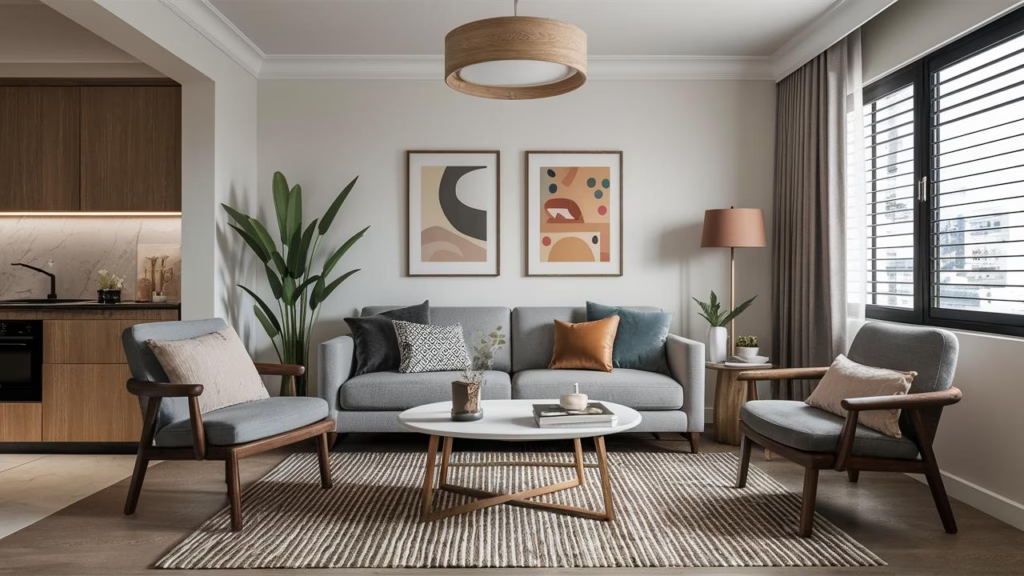
What is a Traditional Chinese Medicine Home Environment, and Why Does It Matter?
At its core, a traditional Chinese medicine home environment goes beyond decor — it’s about designing a physical space that nourishes your body, calms your mind, and balances your energy. When you apply Traditional Chinese Medicine principles like Yin and Yang balance, optimized Qi flow, and the Five Elements in your living space, you create a home environment that actively supports healing and overall well-being. Your traditional Chinese medicine home environment becomes more than just a place to live — it transforms into a therapeutic sanctuary that mirrors and enhances your internal health.
TL;DR Summary
- Transform your space using Traditional Chinese Medicine principles for emotional and physical wellbeing.
- Learn how to balance Yin and Yang elements to prevent energy stagnation or overwhelm.
- Improve the Qi flow in your home using practical Feng Shui practices and spatial arrangement.
- Decorate intentionally with the Five Elements (Wood, Fire, Earth, Metal, Water) to restore elemental balance in each room.
- Introduce healing plants for natural energy purification and to enhance tranquility.
Understanding the Basics of Yin and Yang Balance
Yin and Yang are the foundation of your traditional Chinese medicine home environment. These complementary forces represent opposite energies that create harmony when balanced properly. Yin embodies cool, soft, dark, and restful qualities, while Yang represents bright, energetic, warm, and active elements. When you walk into a brightly lit kitchen and feel instantly energized, or step into a soft, quiet bedroom and feel your body relax, you’re experiencing Yin and Yang balance in action.
To create an effective traditional Chinese medicine home environment, your bedroom should embrace more Yin energy — think dark, cozy curtains, soothing colors like navy or deep greens, and soft textures beneath your feet. Meanwhile, active spaces like your living room or dining area should incorporate more Yang elements — bright colors, lively lighting, and open spaces for socializing. The secret to balancing Yin and Yang in your home lies in achieving equilibrium; too much Yin creates a gloomy atmosphere, while excessive Yang makes relaxation difficult.
How to Balance Yin and Yang in Your Home
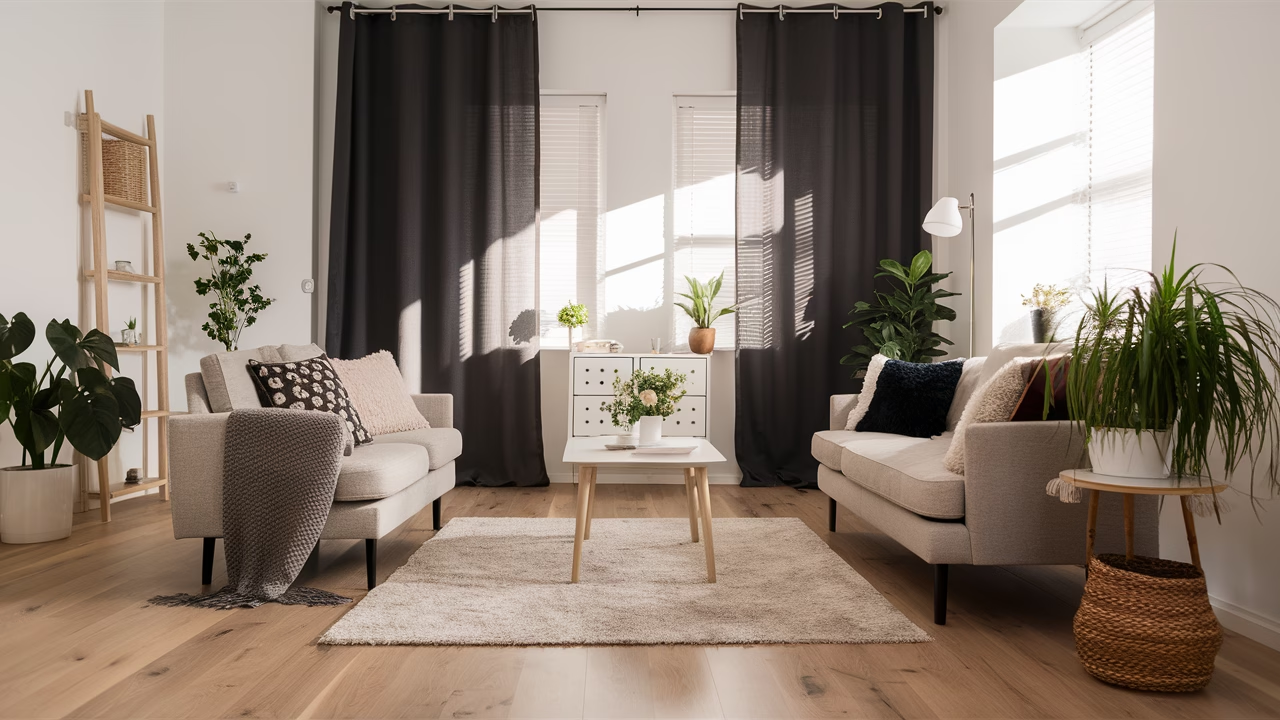
To effectively balance Yin and Yang in your home, evaluate the light, color, texture, sound, and activity level in each room. Here’s how to create proper Yin and Yang balance:
- For overly Yang spaces (like home offices): Add yin elements like soft lighting, acoustic panels to absorb harsh sounds, and indoor plants.
- For overly Yin spaces (like basements): Introduce yang with mirrors, brighter lamps, vibrant artwork, or uplifting music.
Creating Yin and Yang balance isn’t about perfection, but about responsiveness. Notice how you feel in each space and adjust accordingly to maintain harmony in your traditional Chinese medicine home environment.
Enhancing Qi Flow in Your Living Space
Qi flow is the vital life force that animates every aspect of your traditional Chinese medicine home environment. In Traditional Chinese Medicine and Feng Shui practices, when Qi flows freely throughout your living space, you experience better health, increased mental clarity, and emotional vitality. However, when Qi flow becomes blocked by clutter, poor layout, or stagnant energy, it can manifest as stress, illness, and disharmony in your daily life.
Improving Qi Flow in Your Living Space
Start improving Qi flow in your living space with the fundamentals: eliminate clutter completely. Clutter doesn’t just collect dust and restrict airflow — it psychologically overwhelms your mind and dampens your sense of clarity. Next, examine your furniture layout carefully. Can Qi flow naturally through walkways, or does oversized or poorly positioned furniture obstruct its path?
- Avoid sharp angles pointing at seated areas (these create Feng Shui “poison arrows” that disrupt Qi flow).
- Maintain open entryways and create “bright hallways” — well-lit, unobstructed areas near your main entrance.
- Repair any broken items immediately — they reflect unresolved energetic blockages in your traditional Chinese medicine home environment.
Enhance Qi flow by engaging multiple senses: incorporate gentle sounds (soft wind chimes), natural scents (essential oils), and varied lighting (adjustable brightness for different times of day) to support Qi’s dynamic movement throughout your space.
Harnessing the Power of the Five Elements
The Five Elements form a crucial component of any traditional Chinese medicine home environment. According to TCM theory, the universe consists of five dynamic elements: Wood, Fire, Earth, Metal, and Water. These elements interact through constructive and destructive cycles, and when present in balanced proportions within your living space, they cultivate harmony and promote health across all areas of life.
Each element corresponds to specific colors, shapes, materials, and emotional qualities in your traditional Chinese medicine home environment:
| Element | Color | Shape | Material | Emotion |
|---|---|---|---|---|
| Wood | Green | Rectangular | Plants/Wood | Growth, Compassion |
| Fire | Red | Triangle | Candles/Lamps | Passion, Joy |
| Earth | Yellow/Beige | Square | Ceramics/Clay | Stability, Nurturing |
| Metal | White/Grey | Round | Metals/Ores | Clarity, Precision |
| Water | Black/Blue | Wavy | Glass/Mirrors | Wisdom, Flow |
Effective Use of Five Elements in Home Decor
To apply the Five Elements in your traditional Chinese medicine home environment, assess which areas of your life need support and incorporate the corresponding element into relevant rooms:
- For enhanced clarity and productivity: add Metal elements to your office space — round mirrors, white accents, or metallic fixtures.
- To improve emotional connection and family health: infuse Wood elements like plants or green wall art into communal areas.
- When seeking creative inspiration: place Fire elements like red pillows or triangular objects in your creative workspace.
Make seasonal adjustments to your Five Elements balance when life changes demand different energetic support in your traditional Chinese medicine home environment.
Creating a Healing Environment with Plants
Healing plants serve as nature’s air purifiers in your traditional Chinese medicine home environment. In TCM philosophy, live plants not only filter pollutants but actively promote rejuvenation, peace, and healthy Qi flow throughout your living space. However, different plants serve distinct energetic purposes in creating your ideal traditional Chinese medicine home environment.
Best Healing Plants and Their Energetic Effect
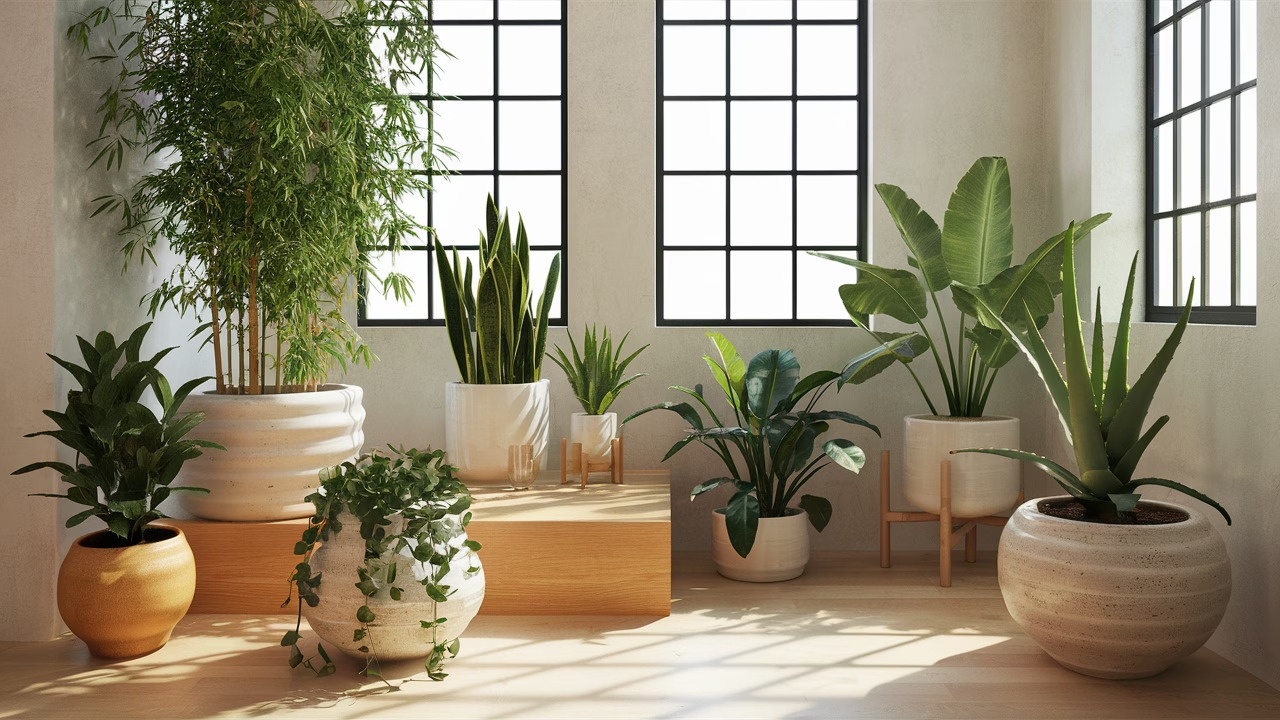
- Peace Lily: Functions as a powerful Yin supporter, effectively calming high Yang environments such as kitchens or active home offices.
- Bamboo: Symbolizes resilience and abundance — perfect for communal spaces where you want to encourage growth and prosperity.
- Aloe Vera: Provides physical healing properties while acting as a natural Qi harmonizer in your traditional Chinese medicine home environment.
- Snake Plant: Offers protective energy and superior air purification, particularly effective in entrance areas or near electronic devices.
Arrange healing plants thoughtfully throughout your traditional Chinese medicine home environment — avoid cluttering corners or cramming multiple pots on windowsills. Allow each plant adequate space to thrive, and remember: dying plants represent declining energy, so replace them promptly to maintain fresh, vibrant Qi flow.
Cost Guide: Budgeting for a TCM-Inspired Home
| Investment Area | Low-End | Mid-Range | High-End |
|---|---|---|---|
| Plants & Planters | $30–$80 | $100–$250 | $300+ |
| Lighting Adjustments | $50 | $200 | $500+ |
| Decor for Five Elements | $40 | $150 | $400+ |
| Furniture Rearrangement | Free | Minimal helper fees | Professional design ($500+) |
Final Thoughts: The Home as a Living System
Your traditional Chinese medicine home environment, like your body, has specific energetic needs that require attention and care. By applying time-honored principles from Traditional Chinese Medicine and Feng Shui practices, you create an environment that transcends mere aesthetics — it becomes genuinely healing. Whether you’re gently adjusting Yin and Yang balance, opening pathways for improved Qi flow, or using healing plants to cultivate tranquility, these approaches help align your body, spirit, and surroundings into holistic harmony. Your traditional Chinese medicine home environment becomes a reflection of both style and intention — a living, breathing system of balance and vitality that supports your overall wellness journey.
Frequently Asked Questions
- What does TCM recommend for breakfast?
TCM recommends warm foods in the morning, such as congee, steamed vegetables, and miso soup, to support the Spleen and aid digestion. - Can Feng Shui and TCM be used together in design?
Absolutely. Feng Shui applies the spatial energy aspect of TCM, making the two deeply complementary when designing harmonious spaces. - Is it bad to have mirrors in the bedroom?
In TCM-based Feng Shui, mirrors can disturb restful Yin energy if placed opposite the bed. They should be covered or moved for better sleep. - What is the best plant for Qi flow in small apartments?
Bamboo or Lucky Bamboo is ideal due to its vertical growth and symbolism of vitality and adaptability. - How often should I rearrange my furniture for Qi flow?
Seasonally or whenever the space feels energetically stagnant. Listen to how the room makes you feel. - Do synthetic materials affect the energy balance?
Yes — synthetic materials often block or stagnate Qi due to lacking ‘life force.’ Natural fibers and textures promote better energetic flow.