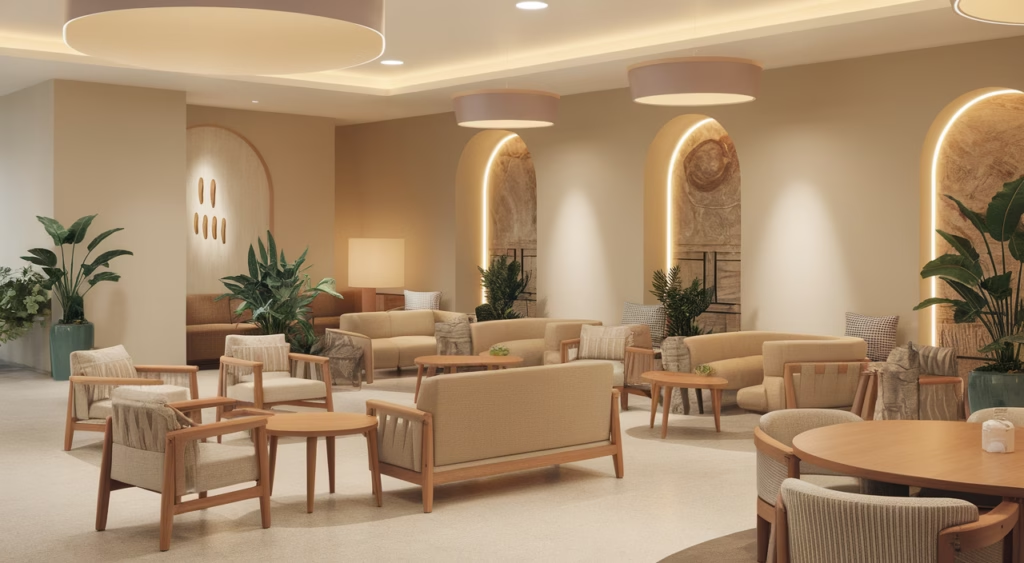
TL;DR: As interior designers dedicated to senior living, we firmly believe that the environment plays a pivotal role in the quality of life for aging adults. This article serves as your essential guide to creating exceptional adult day care centers, focusing on the best interior design for adult day care centers that prioritizes both functionality and aesthetic appeal. We dive deep into practical strategies for developing functional layouts for senior care facilities, ensuring seamless flow and enhanced daily activities. Discover creative senior living design inspiration that moves beyond conventional approaches, incorporating innovative decor ideas for aging adults that stimulate engagement and provide comfort. Furthermore, we address the crucial aspect of affordability, offering actionable insights for affordable senior living interior design ideas without compromising on quality or safety. Our aim is to provide you with the comprehensive, detailed guidance often missing from other resources, empowering you to design spaces that are not only beautiful but truly transformative for the senior community you serve.
What is the best interior design for adult day care centers?
The best interior design for adult day care centers seamlessly blends aesthetic appeal with paramount functionality, accessibility, and a profound understanding of the unique needs of aging adults. It creates a nurturing, stimulating, and safe environment that promotes engagement, independence, and overall well-being for participants.
Best Interior Design Practices for Adult Day Care Centers
As professionals in the interior design industry specializing in senior care facilities, we understand that designing for adult day care centers goes far beyond choosing pretty colors and comfortable furniture. It’s about crafting an environment that actively supports cognitive function, enhances physical safety, and fosters a strong sense of community and belonging. Our approach to adult day care design is holistic, considering every detail from a participant’s perspective and anticipating their needs.
When embarking on an adult day care design project, the initial phase involves a deep dive into understanding the specific demographic of the center. Is it primarily for individuals with early-stage dementia, or does it cater to those needing more physical assistance? This understanding directly informs material selection, spatial planning, and the integration of specialized features. We champion biophilic design principles, introducing elements of nature through natural light, indoor plants, and views of green spaces. This connection to the natural world has been shown to reduce stress, improve mood, and aid in cognitive function, making it an invaluable aspect of senior living interior design. Incorporating a variety of textures – soft fabrics, smooth wood, rough stone – can provide sensory stimulation that is both calming and engaging for participants. These sensory experiences are key in creating a rich and stimulating environment.
Furthermore, color psychology plays a significant role in adult day care design. Warm, inviting colors can foster a sense of comfort and belonging, while strategically placed contrasting colors can aid in wayfinding and delineate different activity zones. For instance, using a distinct color for doorways can help individuals with visual impairments identify exits or entry points more easily. Glare reduction is another critical consideration, often overlooked. Matte finishes on floors and walls, along with indirect lighting, can significantly reduce glare, which is particularly disorienting and uncomfortable for aging eyes. Thoughtful lighting design, incorporating both natural and adjustable artificial light, supports circadian rhythms, which can improve sleep patterns and reduce agitation.
A well-executed adult day care design prioritizes acoustic comfort. High ceilings and hard surfaces can create excessive reverberation, making conversations difficult and increasing sensory overload. We recommend incorporating sound-absorbing materials such as acoustic panels, soft furnishings, and even strategically placed bookshelves filled with books. This attention to acoustics creates a calmer, more conducive environment for communication and relaxation, directly addressing common challenges in senior care design. The overall goal is to create spaces that feel like an extension of home, yet offer specialized support and opportunities for social interaction and meaningful activities. This intricate balance is what defines truly impactful senior living interior design.
Creative Design Ideas for Senior Living Spaces
When we talk about creative senior living design inspiration, we’re envisioning environments that are far from clinical or institutional. We aim to design adult day care centers that evoke warmth, familiarity, and a sense of purpose. One innovative approach is to create themed “neighborhoods” or distinct zones within the center. For example, a “library nook” with comfortable armchairs and shelves of books can offer a quiet retreat, while a “community kitchen” area might encourage group cooking activities. These distinct areas, clearly defined through varied decor, lighting, and furnishings, help with orientation and provide diverse options for engagement.
Another powerful creative idea for adult day care design is the incorporation of reminiscence therapy through design elements. This could involve creating a “memory lane” wall adorned with vintage photographs, historical artifacts, or themed decor from past decades. For instance, a small display cabinet showcasing items from the 1950s or 60s can spark conversations and provide a sense of nostalgia, aiding in cognitive stimulation and social interaction. We often recommend using actual, safe antique pieces or replicas that are tactile and inviting, encouraging participants to touch and explore. Similarly, sensory gardens, even small indoor versions, offer a wealth of therapeutic benefits. Raised garden beds allow for accessible gardening activities, while fragrant plants and soothing water features engage multiple senses, fostering a connection with nature that is deeply calming.
For individuals with cognitive decline, predictable environments are incredibly beneficial. However, predictability doesn’t equate to boredom. We can introduce subtle, rotating elements of novelty to keep the space engaging. This might involve seasonal decor changes, rotating art displays from local artists, or even interactive digital displays that showcase calming nature scenes or historical footage. The key is to make these changes thoughtfully, ensuring they enhance rather than disrupt the routine. Utilizing diverse seating options – from rocking chairs to sofas to individual armchairs – allows participants to choose what feels most comfortable and suitable for their activity or mood, promoting autonomy within the adult day care center environment.
Beyond the functional, the aesthetic must be inspiring. Creative senior living design inspiration draws from residential aesthetics, avoiding anything that feels overly sterile. This means choosing furniture that looks like it belongs in a home, with soft edges and inviting textures, rather than institutional-grade pieces. Incorporating personalized touches, such as bulletin boards where family members can post photos or messages, fosters a deeper connection to the center. Thoughtful placement of artwork at eye level, ensuring it is relevant and stimulating, contributes to a rich visual environment. These subtle yet impactful choices are what elevate an adult day care center from a mere facility to a truly enriching senior living space, directly addressing the need for innovative decor ideas for aging adults.

Functional Layouts to Enhance Daily Activities
Creating functional layouts for senior care facilities is arguably the most critical aspect of effective adult day care design. It’s about designing for movement, independence, and purposeful engagement. Our primary goal is to minimize barriers and maximize opportunities for activity and social interaction. This means carefully planning circulation paths, activity zones, and quiet retreats to support a varied day for participants.
When we approach spatial planning, clear and unobstructed pathways are paramount. Corridors should be wide enough to accommodate wheelchairs, walkers, and two people walking side-by-side without feeling cramped. We often integrate handrails along main corridors, designed to be comfortable and easily gripped, providing subtle support without appearing institutional. Flooring choices are also integral to functional layouts for senior care facilities. Non-slip, low-pile carpeting or specialized resilient flooring materials are preferred over highly polished surfaces that can create glare and increase the risk of falls. Transitions between different flooring types must be seamless to prevent tripping hazards, a foundational element of safe senior living spaces.
Defining distinct zones for different activities is essential for adult day care centers. We might design an area for active games and exercises, another for quiet reading and puzzles, and a dedicated space for dining and social gatherings. Each zone should have its own character, perhaps through varying lighting, color schemes, or specific furniture arrangements, but always maintaining visual continuity to aid orientation. For instance, a sensory room might feature softer lighting, comfortable recliners, and interactive elements like bubble tubes or light projectors, offering a calming retreat from more stimulating areas. The flexibility of these spaces is also crucial; furniture that can be easily rearranged allows for adaptation to various activities, from group therapy to individual quiet time.
The layout must also facilitate efficient supervision by staff without feeling intrusive. Open sightlines are crucial for staff to monitor participants while maintaining a respectful distance. This can be achieved through thoughtful placement of low-profile furniture and strategic positioning of staff stations that offer clear views of common areas. Storage solutions should be integrated and discreet, allowing for easy access to activity supplies while keeping clutter to a minimum, which contributes to a calm and organized environment. Accessible restrooms, clearly marked and equipped with grab bars and emergency call systems, are non-negotiable elements in any senior living interior design. The placement of these facilities needs to be intuitive and easily reachable from all activity zones, minimizing travel distance and promoting independence. Ultimately, our work in creating functional layouts for senior care facilities is about empowering participants to move freely, engage meaningfully, and feel secure within the thoughtfully designed adult day care center.
Affordable and Stylish Decor Inspiration for Senior Care Facilities
The misconception that stylish and innovative adult day care design must come with a prohibitively high price tag is one we frequently encounter and are determined to disprove. As interior designers, we are constantly seeking affordable senior living interior design ideas that do not compromise on quality, safety, or aesthetic appeal. Our focus is on smart sourcing, clever repurposing, and strategic investment to achieve beautiful, functional, and budget-conscious spaces.
One of the most effective strategies for affordable senior living interior design ideas is intelligent material selection. While custom millwork can be costly, high-quality, durable laminate finishes can mimic the look of natural wood or stone at a fraction of the price. These materials are also often easier to clean and maintain, which is a significant operational advantage for adult day care centers. Similarly, instead of investing heavily in bespoke furniture, we often recommend commercially graded, senior-friendly pieces that are designed for durability and comfort but come from more accessible manufacturers. These pieces can then be personalized with custom upholstery in vibrant, easy-to-clean fabrics, offering a bespoke feel without the bespoke cost.
Lighting is another area where significant impact can be achieved without breaking the bank. While high-end fixtures can be beautiful, a well-planned lighting scheme using standard, energy-efficient LED fixtures can create an inviting ambiance. Utilizing natural light as much as possible reduces the need for artificial lighting during the day, yielding energy savings. Strategic use of decorative lamps, floor lamps, and task lighting can add warmth and visual interest, creating zones within larger spaces and contributing to innovative decor ideas for aging adults without a huge financial outlay. Focusing on adjustable brightness and color temperature controls allows for versatility and supports individual preferences.
Art and accessories are powerful tools for transforming a space, and they don’t have to be expensive. Instead of purchasing original art, consider high-quality prints of local landscapes, calming abstract pieces, or reproductions of classic works. Engaging local art schools or community groups to contribute art can also provide unique, meaningful pieces while fostering community connections. Similarly, incorporating plants, both live and high-quality artificial ones, adds life and color. These biophilic elements are essential for senior care design. Decorative pillows, throws, and curtains in engaging patterns and textures can instantly elevate the perceived quality of a space, making it feel more residential and less institutional. We prioritize textiles that are durable, stain-resistant, and easily washable to ensure longevity and hygiene. These choices are integral to creating creative senior living design inspiration that is also practical and economical.
Incorporating Safety Features in Interior Design
The safety of participants in adult day care centers is non-negotiable, and as interior designers, we embed safety features into every aspect of our adult day care design. This isn’t about creating a sterile, hospital-like environment; it’s about seamlessly integrating protective measures that support independence and prevent accidents, often in ways that are subtle and aesthetically pleasing. Safe senior living spaces are foundational to our design philosophy.
Fall prevention is paramount. We meticulously select flooring materials that are non-slip, even when wet, and ensure all transitions between different floor types are flush to eliminate tripping hazards. Rugs, if used, must be securely anchored or low-pile with non-slip backings. Furniture is chosen for stability and ease of use, with appropriate heights for easy sitting and standing. Armrests on chairs provide crucial support, and their design should be comfortable for gripping. We also consider furniture placement to ensure clear, unobstructed pathways, minimizing the risk of collision, particularly for those using mobility aids.
Lighting plays a critical role in safety. Adequate, uniform illumination throughout the adult day care center is essential, with particular attention paid to areas like restrooms, stairs (if present and accessible), and transition zones. We implement dimmable lighting and layered lighting schemes to adjust to different activities and times of day, reducing harsh shadows and glare that can disorient aging eyes. Nightlights or subtle pathway lighting in key areas can prevent nighttime falls, even if participants only visit during the day, maintaining a consistent environment. Emergency lighting systems are also a standard part of our design specifications.
Beyond falls, we address other potential hazards through thoughtful adult day care design. Kitchens or food preparation areas, if accessible to participants, are designed with safety in mind: induction cooktops to prevent burns, clearly labeled appliances, and accessible controls. Restrooms feature grab bars in appropriate locations, non-slip flooring, and emergency call buttons that are easily reachable. We specify plumbing fixtures that prevent scalding by limiting water temperature. Door hardware is selected for ease of use, avoiding small knobs that can be difficult to grasp, favoring lever handles instead. Outlets and cords are strategically placed and secured to prevent tripping and provide power access without clutter. These detailed considerations are what transform a space into truly safe senior living spaces, ensuring peace of mind for both participants and staff, embodying the best interior design for adult day care centers.

Implementing Innovative and Accessible Designs for Aging Adults
Innovative decor ideas for aging adults and accessible design are not separate concepts; they are deeply intertwined, forming the bedrock of exceptional adult day care design. Our philosophy as senior living interior designers dictates that accessibility should be beautiful, seamlessly integrated into the aesthetic, and enhance the user experience without appearing clinical. This proactive approach ensures that every participant, regardless of their physical or cognitive abilities, can fully engage with their environment.
One key aspect of innovative decor ideas for aging adults is the incorporation of technology that enhances safety and engagement without being overwhelming. This can range from subtle motion-sensor lighting in activity areas that gently illuminates pathways, to interactive touch-screen tables that offer engaging cognitive games or allow for virtual tours of natural landscapes. These technological integrations are chosen for their intuitive interfaces and ability to provide stimulating experiences, supporting the goals of adult day care centers. We also consider discreet monitoring systems that can alert staff to a participant’s needs without compromising their privacy or creating a sense of being constantly watched. Such systems can be vital in creating truly safe senior living spaces.
Universal design principles are at the core of our approach to senior living interior design. This means creating spaces that are usable by all people, to the greatest extent possible, without the need for adaptation or specialized design. Examples include wider doorways and hallways, lever-style door handles, and bathrooms designed for full accessibility. Beyond the basics, we focus on tactile cues to aid navigation for those with visual impairments – perhaps a change in flooring texture to indicate a new zone, or raised lettering on signage. Color contrast is another powerful tool, used not just for aesthetics but to clearly differentiate elements like handrails from walls, or chair edges from the floor, making the environment more legible for aging eyes.
Flexibility and adaptability are hallmarks of innovative adult day care design. We often specify modular furniture that can be easily reconfigured to suit different activities, from group therapy to individual craft sessions. Adjustable-height tables allow participants to engage comfortably whether standing or seated, or even from a wheelchair. These design choices empower individuals by giving them more control over their environment and activities. Furthermore, creating multi-sensory environments that can be adjusted to individual preferences is crucial. This could involve lighting systems with tunable white light that mimics natural daylight cycles, or sound systems that can play calming background music or nature sounds in specific zones. These thoughtful, adaptable elements contribute significantly to participant comfort and well-being, moving beyond basic accessibility to truly innovative decor ideas for aging adults.
Finally, the integration of personalized spaces within the larger adult day care center environment is an innovative approach that fosters a sense of ownership and belonging. This might include dedicated cubbies or lockers where participants can store personal items, or small, semi-private nooks that offer a sense of retreat while remaining within view of staff. These small details, often overlooked, contribute immensely to the overall experience, reinforcing the idea that the center is a welcoming and supportive extension of their home. By prioritizing these innovative and accessible designs, we ensure that adult day care centers are not just facilities, but vibrant communities that enrich the lives of aging adults, making them truly exemplary senior care design examples.
The Future of Adult Day Care Design: Prioritizing Well-being and Engagement
As interior designers deeply embedded in the senior living sector, we see the future of adult day care design evolving rapidly, driven by a growing understanding of geriatric care and an increasing demand for sophisticated, person-centered environments. Our commitment is to remain at the forefront of this evolution, continuously integrating the latest research and best practices to create spaces that truly elevate the participant experience. This forward-thinking approach is crucial for any professional looking to excel in senior living interior design.
A key trend we are observing and actively promoting is the shift towards even greater personalization within adult day care centers. While group activities are vital, the ability to cater to individual preferences and needs, even within a communal setting, is becoming increasingly important. This might manifest as dedicated “hobby corners” – a small workbench for those who enjoy tinkering, an easel for artists, or a quiet space for meditation. These micro-environments, thoughtfully designed, allow participants to pursue individual interests, fostering a sense of purpose and combating boredom, which is a common challenge in traditional settings. These are prime examples of innovative decor ideas for aging adults that respect individual agency.
Another significant development in adult day care design is the enhanced integration of outdoor spaces. Beyond simple patios, we are designing secure, stimulating sensory gardens that offer a safe opportunity for engagement with nature. These spaces might include accessible walking paths, raised garden beds for gardening therapy, bird feeders to attract local wildlife, and comfortable outdoor seating areas protected from the elements. The therapeutic benefits of spending time outdoors – from improved mood to increased physical activity – are well-documented, making these outdoor extensions an integral part of modern senior care design. This expansion of the usable environment directly contributes to creating more diverse and engaging functional layouts for senior care facilities.
Furthermore, we are focusing on creating a stronger connection to the local community through design. This could involve designating spaces for intergenerational programs, where children from nearby schools can visit and interact with participants, or creating display areas for local artists and craftspeople. Design elements that reflect local culture or history can also foster a sense of familiarity and pride. This integration helps to break down the perceived isolation of adult day care centers, transforming them into vital community hubs. Such considerations are fundamental to crafting the best interior design for adult day care centers that resonate deeply with their surroundings.
Finally, the emphasis on staff well-being in adult day care design is gaining the recognition it deserves. A comfortable, efficient, and well-designed workspace for staff directly translates to better care for participants. This includes ergonomic workstations, easily accessible storage for supplies, and dedicated break rooms that offer a true respite. When staff feel valued and supported by their environment, their capacity to provide compassionate and effective care is significantly enhanced. This holistic view, encompassing participants, staff, and community, defines the pinnacle of contemporary senior living interior design, offering creative senior living design inspiration that is both visionary and deeply practical. By addressing these nuanced aspects, we ensure that every adult day care center we design is not just a building, but a thriving ecosystem dedicated to the enrichment and dignity of aging adults.

