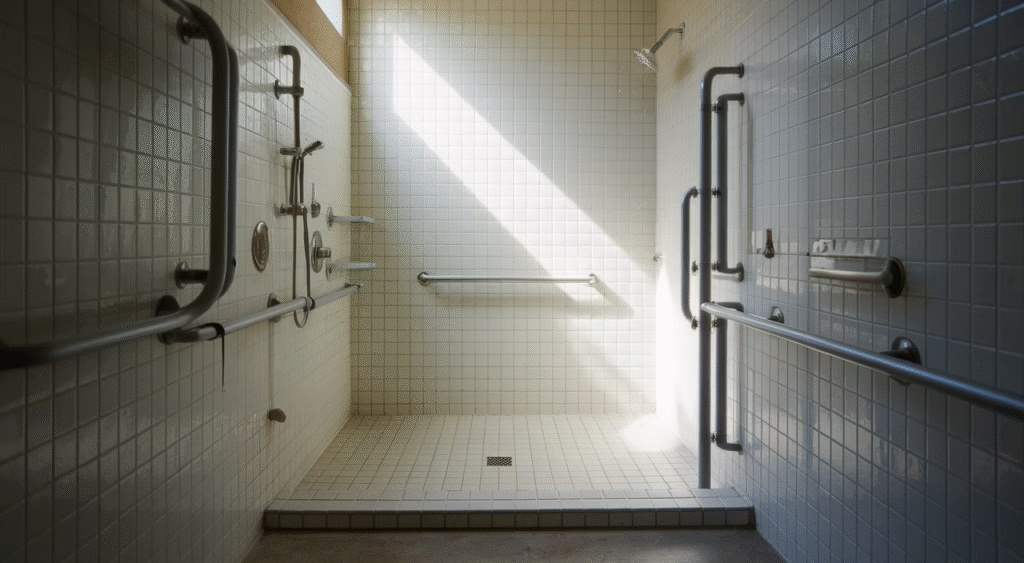
What Are the Most Effective Bathroom Modifications for Accessibility?
Bathroom modifications serve as the foundation for safe, independent living for seniors, wheelchair users, and individuals with mobility challenges. These strategic home accessibility modifications transform one of the most hazardous rooms in your house into a secure, dignified space where you can maintain your independence with confidence.
- ✅ Empowers independence: Proper bathroom modifications reduce caregiver dependence and foster autonomy for seniors and wheelchair users.
- ✅ Enhances safety: Accessible home modifications dramatically lower fall risks—especially critical for aging in place.
- ✅ Personalized solutions: Senior home modifications tailored to individual mobility challenges and medical conditions.
- ✅ Increases home value: Many home accessibility modifications boost property marketability and appeal.
- ✅ Supports aging in place: Essential accessible home modifications enable you to remain safely in your home longer.
I. Identifying Home Accessibility Needs
A. Assessing Your Bathroom’s Layout

Begin by evaluating your current bathroom setup with accessibility in mind. Does your space provide adequate clearance for wheelchair navigation? Are surfaces slip-resistant? Can you safely enter and exit your bathtub? These fundamental questions guide your bathroom modifications strategy.
Common accessibility barriers include:
- Narrow doorways that restrict wheelchair access and mobility aids
- High thresholds, slippery floors, and inadequate lighting
- Standard-height toilets and bathtubs with elevated entry points
As mobility experts, we recommend conducting thorough home accessibility assessments with individuals in their actual living environment. We observe turning radii for wheelchairs, identify risky behaviors like one-foot balancing during tub entry, and evaluate how well existing mobility aids integrate with the space. This personalized approach ensures your bathroom modifications address real-world challenges rather than generic solutions.
B. Understanding Different Disabilities and Conditions
Effective senior home modifications require understanding unique functional needs. Consider these examples:
- Individuals with Parkinson’s disease benefit from stability-focused bathroom modifications for tremor-related balance issues.
- Stroke survivors often need one-handed adaptations and enhanced balance support through strategic grab bar placement.
- Wheelchair users require broader clearances, roll-under sinks, and accessible home modifications for seamless navigation.
The selection of appropriate independent living aids depends entirely on the specific condition and mobility challenges involved. Professional assessment ensures your bathroom modifications investment aligns perfectly with your functional requirements. Successful accessible home modifications for aging in place result from this tailored, condition-specific approach rather than one-size-fits-all solutions.
II. Key Bathroom Modifications for Improved Accessibility
A. Installing Grab Bars and Handrails
Grab bars represent the most cost-effective bathroom modifications for immediate safety improvement. These essential mobility aids provide stable support during transfers from wheelchairs to toilets and safe navigation over tub edges. Ensure all installations meet ADA standards, anchor securely into wall studs, and position at appropriate heights for individual users.
- Wall-mounted horizontal or L-shaped bars near toilets for transfer support
- Vertical grab bars for secure shower entry and exit assistance
- Space-saving fold-down grab bars that accommodate multiple users
These critical mobility aids reduce joint strain and minimize fall risks while promoting user-directed movement. Think of grab bars as your personal support system—always within reach when you need stability most.
B. Upgrading to a Walk-in Shower or Tub
Traditional bathtubs create significant slip and trip hazards for seniors and wheelchair users. Walk-in shower installations eliminate climbing barriers entirely, making them essential accessible home modifications. Key safety features include:
- Zero-threshold or low-entry access for wheelchair compatibility
- Non-slip flooring with integrated bench seating for comfort
- Adjustable handheld showerheads with easy-reach slidebars
- Anti-scald temperature controls for cognitive safety
These bathroom modifications dramatically improve comfort and safety for individuals with balance issues or cognitive conditions. Installing walk-in features represents more than convenience—it’s a crucial investment in long-term independence and peace of mind for aging in place.
C. Raising Toilet Seats and Installing Supportive Commodes
Standard toilet heights create transfer difficulties and fall risks for seniors and wheelchair users. Consider replacing existing toilets with comfort-height models (17-19 inches) or adding raised toilet seats as effective senior home modifications. Additional supportive options include:
- Padded toilet safety frames for enhanced stability during transfers
- Adjustable side rails with comfortable armrest positioning
- Portable bedside commodes for individuals with severe mobility restrictions
These bathroom modifications prove particularly valuable for individuals managing arthritis, hip surgeries, or general muscle weakness. Consider toilet height adjustments similar to ergonomic chair modifications—the core function remains unchanged, but daily use becomes significantly safer and more comfortable.
III. Budgeting and Cost Considerations
Bathroom modifications span from simple DIY additions to comprehensive accessibility remodeling. Use this breakdown to plan your home accessibility modifications budget effectively:
| Modification | Low-End | Mid-Range | High-End |
|---|---|---|---|
| Grab Bars | $80 | $200 | $450+ |
| Walk-in Shower | $1,500 | $5,000 | $10,000+ |
| Raised Toilet | $85 | $300 | $600+ |
| Full Remodel | $7,000 | $15,000 | $30,000+ |
Remember: not all effective bathroom modifications require significant investment. Sometimes simple adjustments provide substantial safety benefits. Occupational therapists typically recommend phased senior home modifications—addressing urgent safety needs first, then progressing toward comprehensive upgrades over time. Research available grants and financial assistance programs that may offset costs for accessible home modifications for aging in place.
IV. Seeking Professional Assistance for Home Modifications

Professional collaboration ensures your bathroom modifications are practical, code-compliant, and truly personalized for your needs. Here are essential team members for successful home accessibility modifications:
- Occupational Therapists: Provide expert insight into daily functional requirements and recommend tailored senior home modifications.
- Certified Aging-in-Place Specialists (CAPS): Specialized contractors trained in disability-friendly design and accessible home modifications.
- Accessibility Contractors: Execute complex installations like grab bars, shower conversions, and structural modifications safely.
Remember, these bathroom modifications represent more than simple renovations—they’re essential upgrades for your health, safety, and continued independence. Professional guidance proves invaluable when integrating home modifications for wheelchair users or addressing complex structural accessibility challenges.
Final Thought
Transforming your bathroom through strategic accessibility modifications isn’t just about installing grab bars or adjusting toilet heights—it’s about creating a sanctuary where you or your loved ones can age gracefully, maintain independence, and feel empowered daily. Each thoughtful bathroom modification, whether substantial or simple, represents progress toward barrier-free living. So consider this: what’s one accessibility improvement you can implement this week to enhance safety and independence?
Frequently Asked Questions
Should chemo patients use a different bathroom?
If your immune system is significantly suppressed after chemotherapy, it’s advisable to use a separate bathroom, or have the shared space thoroughly disinfected regularly. It’s less about the modifications and more about hygiene and avoiding infection risks.
Can I install grab bars myself?
While many grab bar kits are marketed as DIY-friendly, it’s best to have them professionally installed. They must be anchored into wall studs with proper hardware to support body weight safely.
How wide should doorways be for wheelchair-friendly bathrooms?
According to most accessibility guidelines, bathroom doorways should be at least 32 inches wide to accommodate wheelchair users comfortably.
Are walk-in tubs safer than showers?
Both can be safe if designed properly. Walk-in tubs reduce tripping hazards but can be harder for people who need help. Walk-in showers often offer more flexibility, particularly with roll-in capabilities for wheelchair users.
Is moisture a concern after remodeling?
Yes. Proper venting and waterproofing are essential in accessible bathrooms, especially when mobility aids or electronics are involved.
What’s a good first modification?
Installing a grab bar near the toilet or shower is usually the lowest-cost, highest-impact improvement you can make immediately.
Are senior home modifications tax-deductible?
Some modifications may be tax-deductible as medical expenses, especially if prescribed by a medical professional. Always consult a tax advisor for your region.

