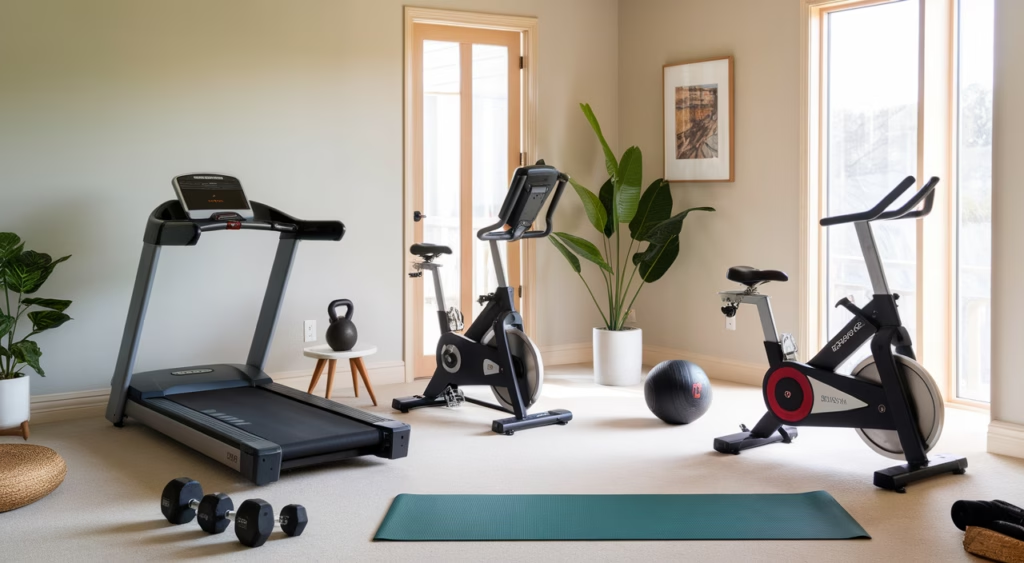
As a fitness coach, I understand the juggle. Life gets incredibly busy, especially when you're a dedicated professional or a parent navigating the demands of family life. Finding time for your health and fitness often feels like an impossible puzzle piece, squeezed between meetings, school runs, and countless other obligations. But what if I told you there's a way to reclaim that time, to bring the power of a full-fledged fitness routine directly into your home, on your own schedule? Imagine the convenience, the privacy, and the sheer efficiency of stepping into your own dedicated workout space, whenever you choose. That's the dream of a home gym, and I'm here to tell you it's more accessible and impactful than you might think.
How Can You Create an Ultimate Home Gym Experience with Effective Beginner Routines, Space-Saving Equipment, and Expert Tips for Affordability?
Creating an ultimate home gym experience is entirely within reach, even for beginners, by strategically selecting space-saving workout equipment and leveraging expert tips to ensure affordability. It's about designing a functional, motivating space that aligns with your specific fitness goals and fits seamlessly into your lifestyle, proving that world-class fitness doesn't require a costly commercial gym membership or a massive dedicated room.
Many health-conscious individuals, especially busy professionals and parents, face the challenge of integrating consistent physical activity into their demanding schedules. The idea of a home gym often conjures images of sprawling basements filled with expensive, bulky machines. However, I want to reassure you that effective home workout routines for beginners can be built with minimal investment and clever space utilization. We'll explore how to navigate these challenges, providing you with actionable strategies to establish a personal fitness sanctuary that truly works for you. This isn't just about buying equipment; it's about cultivating a healthier lifestyle within the comfort and convenience of your own environment.
Setting the Foundation for Your Perfect Home Gym
Before you even think about purchasing workout equipment, the first crucial step in creating your home gym is a thorough assessment of your available space and a clear understanding of your current fitness level and aspirations. As your fitness coach, I always emphasize that the best home gym is the one you'll actually use, and that starts with careful planning tailored to your unique circumstances.
A. Assessing Your Space
Let's get practical. Look around your home with fresh eyes. Do you have a spare bedroom, a corner of the living room, a section of the garage, or even a quiet nook in your apartment that could serve as your dedicated workout zone? Don't underestimate small spaces; with the right strategy, even a few square feet can become an incredibly effective home gym.
Consider the dimensions of the area. Measure not just the floor space, but also the ceiling height, especially if you're considering equipment that requires vertical clearance, like a pull-up bar or a squat rack. Think about ventilation and natural light – these often overlooked factors can significantly impact your workout experience. Will you feel energized or stuffy? Is there enough room to move freely without bumping into furniture or walls? For instance, if you plan on doing jumping jacks or burpees, you'll need enough head room and lateral space. If you're in an apartment, be mindful of noise transfer to neighbors below, which might influence your choice of flooring or workout intensity during certain hours.
This initial assessment isn't just about identifying a spot; it's about envisioning the potential and understanding the limitations, which will directly guide your equipment choices and overall home gym design. It's the first expert tip for designing an affordable home gym – working with what you have.
B. Choosing the Right Equipment
This is where many people get overwhelmed, but it doesn't have to be complicated. The "right" workout equipment isn't necessarily the most expensive or the most technologically advanced; it's the equipment that aligns with your fitness goals, fits your space, and encourages consistent use. This fills a critical competitor gap, offering detailed recommendations instead of generic advice.
For Strength Training:
- Adjustable Dumbbells: These are gold for space-saving workout equipment for small apartments. A single pair can replace an entire rack of traditional dumbbells, offering a wide range of weights for various exercises. They are perfect for comprehensive strength building without clutter.
- Resistance Bands: Incredibly versatile, lightweight, and affordable. Bands can be used for warm-ups, cool-downs, strength training (upper body, lower body, core), and even rehabilitation. They come in various resistances and are ideal for beginners and advanced lifters alike.
- Kettlebells: Excellent for dynamic movements, strength, and cardiovascular conditioning. A single kettlebell can open up a world of exercises like swings, goblet squats, and presses.
- Pull-Up Bar: A doorway pull-up bar is a fantastic investment for upper body strength. It can often be removed and stored easily.
- Bodyweight Training: Don't underestimate the power of your own body! Push-ups, squats, lunges, planks, and glute bridges require zero equipment and can be incredibly effective, especially for effective home workout routines for beginners.
For Cardiovascular Fitness:
- Jump Rope: A high-intensity, low-cost cardio option that takes up virtually no space. It's fantastic for improving coordination, endurance, and agility.
- Mini Stepper or Pedal Exerciser: If space is truly at a premium, these compact solutions offer a good low-impact cardio option.
- Foldable Treadmills/Bikes: If you have a bit more space and budget, many manufacturers now offer cardio machines that fold up for storage, making them a viable option for a home gym.
For Flexibility and Recovery:
- Yoga Mat: Essential for floor exercises, stretching, yoga, and Pilates. Look for one with good grip and cushioning.
- Foam Roller: Excellent for self-myofascial release, helping to improve flexibility, reduce muscle soreness, and aid in recovery.
When selecting workout equipment, prioritize multi-functional pieces. An exercise bench that inclines, declines, and folds away, or a set of modular weights, can offer incredible versatility. Remember, the goal is to build a professional setup that serves your fitness goals efficiently, not to replicate a commercial gym.
Crafting Your Ideal Home Workout Routine
Once your home gym starts taking shape, the next crucial step is designing your workout routine. This is where many people get stuck, leading to inconsistency. As your fitness coach, I emphasize that a personalized workout routine is paramount for long-term success, especially when working out from home. This addresses another competitor gap by offering guidance on personalized routines.
A. Personalized Fitness Goals
Before you even think about specific exercises, take a moment to define your fitness goals. Are you aiming for weight loss, muscle gain, improved endurance, increased flexibility, or simply better overall health? Your goals will dictate the type, frequency, and intensity of your workouts. For busy professionals and parents, realistic goal setting is key. Don't aim for an hour-long workout six days a week if you know your schedule won't allow it. Start small and build momentum.
- Weight Loss: Focus on a combination of high-intensity interval training (HIIT) and strength training to maximize calorie burn and boost metabolism.
- Muscle Gain: Emphasize progressive overload in your strength training. This means gradually increasing the weight, reps, or sets over time.
- Endurance: Incorporate more cardio sessions, varying intensity and duration.
- Flexibility/Mobility: Dedicate time to stretching, yoga, or Pilates.
- General Health: A balanced approach incorporating all of the above, focusing on consistency and listening to your body.
Remember, your fitness goals are unique to you. Avoid comparing yourself to others. Celebrate every small victory and adjust your goals as you progress. This expert insight ensures you design a home gym experience that is truly personalized.
B. Effective Home Workout Routines
Now that you have your equipment and goals in mind, let's talk about structuring your effective home workout routines for beginners and beyond. The beauty of a home gym is flexibility. You can break up your workouts into shorter, more manageable segments throughout the day if that fits your schedule better.
Sample Beginner Full-Body Routine (3-4 times a week):
- Warm-up (5 minutes): Light cardio (jumping jacks, high knees) and dynamic stretches (arm circles, leg swings).
- Squats (3 sets of 10-15 reps): Bodyweight or with dumbbells/kettlebells.
- Push-ups (3 sets to failure or 8-12 reps): On knees if needed, or against a wall.
- Dumbbell Rows (3 sets of 10-15 reps per arm): Bent-over rows with one hand on a sturdy surface.
- Plank (3 sets, hold 30-60 seconds): Focus on core engagement.
- Lunges (3 sets of 10-12 reps per leg): Bodyweight or with dumbbells.
- Cool-down (5-10 minutes): Static stretches, holding each for 20-30 seconds (hamstring stretch, triceps stretch, quad stretch).
Advanced Options & Progression:
- HIIT (High-Intensity Interval Training): Short bursts of intense exercise followed by brief recovery periods. Example: 30 seconds of burpees, 30 seconds rest, repeat 8-10 times. Great for burning calories quickly.
- Circuit Training: Move from one exercise to the next with minimal rest in between, completing all exercises in a "circuit." Rest after completing a full circuit, then repeat.
- Split Routines: If you have more time, you can split your workouts (e.g., upper body one day, lower body another, full body a third day).
- Progressive Overload: As you get stronger, increase the weight, add more repetitions, do more sets, or decrease rest time. This is fundamental for continued progress.
Consistency is more important than intensity when you're starting out. Aim for 20-30 minutes, 3-4 times a week, and build from there. Don't forget to schedule rest days; your muscles need time to recover and grow.
Smart Solutions for Maximizing Small Home Gym Spaces
One of the biggest hurdles for creating a home gym, especially for those living in apartments or smaller homes, is the perception of limited space. But I'm here to tell you that "small" doesn't mean "ineffective." With thoughtful planning and smart choices, you can create a highly functional workout area. This section directly addresses the need for space-saving workout equipment for small apartments, a key competitor gap.
A. Compact Workout Equipment Options
The market for compact solutions has exploded, making it easier than ever to build an efficient home gym in a confined area. Forget bulky machines; think versatile and multi-functional.
- Adjustable Weight Systems: I cannot stress these enough. Adjustable dumbbells and kettlebells (as mentioned earlier) are game-changers. Brands offer single pairs that can range from 5 to 50+ pounds, saving immense space compared to individual weights.
- Foldable Benches: An adjustable workout bench is invaluable for strength training, but a foldable one can be tucked away under a bed or in a closet when not in use.
- Resistance Band Kits: A set of loop bands and tube bands with handles can provide a full-body workout. They are portable, lightweight, and can be stored in a small drawer.
- Suspension Trainers: Systems like the TRX can be anchored to a door or ceiling hook and allow for hundreds of bodyweight exercises, from rows to squats to core work. They pack down into a small bag.
- Stability Ball: While it takes up some space, a stability ball can be used for core work, stretching, and even as a makeshift bench for some exercises. When deflated, it's easily storable.
- Jump Rope: Already mentioned, but worth reiterating for its minimal footprint and high impact.
- Workout Mat: Essential for comfort and protection, but opt for one that rolls up or folds easily.
When considering workout equipment for small apartments, always think "vertical" and "foldable." Can it be hung on a wall? Can it collapse? These questions will guide you toward the most efficient choices for your home gym.
B. Space-Saving Storage Solutions
Beyond the equipment itself, how you store it is critical for maintaining an organized, motivating, and clutter-free home gym. Clutter is a motivation killer!
- Wall-Mounted Shelves/Racks: Utilize vertical space. Wall-mounted shelves can hold resistance bands, yoga blocks, or even smaller dumbbells. Pegboards are fantastic for hanging jump ropes, resistance bands, and other accessories.
- Under-Bed Storage: For foldable mats, benches, or smaller equipment that you want out of sight.
- Storage Bins/Baskets: Keep all your smaller items (bands, jump ropes, heart rate monitors) in dedicated bins that can be neatly tucked away in a corner or closet.
- Door Organizers: Over-the-door shoe organizers with clear pockets can be repurposed to hold small fitness accessories.
- Multi-functional Furniture: Could a storage ottoman double as a plyometric box for step-ups? Can a sturdy bench be used for exercises and then serve as seating? Get creative!
The key here is designating a "home" for every piece of workout equipment. When your space is tidy and functional, you're far more likely to engage in your effective home workout routines, even if it's just for a quick 15-minute session.
Expert Strategies for an Affordable and Sustainable Home Gym
Building a home gym doesn't have to break the bank. In fact, one of my strongest expert tips for designing an affordable home gym is to start small and strategically. As a fitness coach, I've seen countless individuals achieve incredible results with minimal investment, proving that consistent effort trumps expensive gear every time. This section directly addresses the affordability aspect and provides crucial expert insights on designing a home gym that suits various fitness goals and space constraints, filling another important competitor gap.
A. Fitness Coach Recommendations for Budget-Friendly Setup
My top recommendation for anyone starting a home gym on a budget is to prioritize foundational equipment that offers maximum versatility. Think long-term value, not just initial cost.
- Start with Bodyweight: Before buying anything, master bodyweight exercises. Push-ups, squats, lunges, planks – these are the building blocks of strength and cost nothing but your effort. This is an incredible way to kickstart effective home workout routines for beginners.
- Resistance Bands First: If you buy only one piece of equipment, make it a set of resistance bands. They're inexpensive, offer scalable resistance, and can work every muscle group.
- Smart Dumbbell Investment: Instead of buying a full rack, invest in one good pair of adjustable dumbbells or a few fixed-weight pairs that you'll use most often. You can always add more as you progress.
- DIY Options: Get creative! Water bottles or milk jugs filled with sand or water can serve as makeshift dumbbells for lighter weights. A sturdy chair can be used for step-ups or triceps dips.
- Second-Hand Equipment: Check online marketplaces, local classifieds, or garage sales for gently used workout equipment. You can often find fantastic deals on larger items like benches or cardio machines. Just ensure they are in good, safe working condition.
- Sales and Discounts: Keep an eye out for seasonal sales from fitness retailers. Black Friday, January sales, or end-of-season clearances can offer significant savings on new gear.
- Focus on Multi-Purpose Items: A quality yoga mat is not just for yoga; it's for stretching, floor exercises, and ab work. A sturdy exercise bench can be used for chest presses, step-ups, and core exercises.
The goal isn't to spend a lot, but to spend wisely. A well-curated, affordable home gym can be just as effective as a costly one, if not more so, because it removes barriers to consistency.
B. Scaling Your Home Gym with Your Fitness Goals
Your home gym should evolve as your fitness journey does. What starts as a simple setup with resistance bands and a mat can grow into a more sophisticated space, always tailored to your progressing fitness goals.
- Phase 1: The Essentials (Bodyweight & Bands): Focus on mastering fundamental movements and building a consistent routine. This phase costs very little.
- Phase 2: Adding Free Weights: Introduce adjustable dumbbells or kettlebells to increase resistance and challenge. This expands your strength training capabilities significantly.
- Phase 3: Incorporating a Bench & Pull-Up Bar: These additions open up new exercise variations and allow for more comprehensive upper body and core work.
- Phase 4: Cardio Machine (Optional): If your fitness goals lean heavily towards endurance or you enjoy structured cardio, a foldable treadmill, exercise bike, or elliptical can be a great addition when space and budget allow.
- Phase 5: Advanced Equipment: For serious strength enthusiasts, a compact squat rack, Olympic barbell, and weight plates might be the next step. However, this requires more space and a higher investment, so ensure your fitness goals truly demand it.
The beauty of this progressive approach is that you invest gradually, only buying what you need when you need it. This keeps your home gym affordable and ensures every piece of workout equipment serves a purpose relevant to your current fitness level and objectives.
Sustaining Your Fitness Journey: Motivation and Beyond
Building your home gym is an achievement, but sustaining your motivation to use it consistently is the real long-term challenge. As your fitness coach, I know that motivation fluctuates, and having strategies in place to keep you going is vital, especially for busy professionals and parents balancing numerous responsibilities. This section provides expert insights into maintaining enthusiasm and consistency, truly rounding out the home gym experience.
A. Creating a Motivational Environment
Your home gym should be a space that inspires you, not just a place where you keep workout equipment. The ambiance plays a huge role in drawing you in.
- Designate a Clear Space: Even if it's a corner, make it distinctly "the gym." This mental separation helps you switch into workout mode.
- Good Lighting: Bright, natural light can be incredibly energizing. If natural light is scarce, invest in good artificial lighting.
- Music & Sound: Create a workout playlist that gets you pumped up. Consider a small Bluetooth speaker for good sound quality.
- Mirror (Optional but Recommended): A full-length mirror can help you check your form, which is crucial for safety and effectiveness. It also provides visual motivation.
- Inspirational Decor: A simple poster with a motivational quote, a vision board of your fitness goals, or even just keeping the space clean and organized can make a big difference.
- Temperature Control: Ensure the space is well-ventilated and comfortable. Too hot or too cold can be a deterrent.
- Minimize Distractions: If possible, choose a space away from high-traffic areas or turn off notifications during your workout time.
Remember, this is your personal sanctuary for health. Making it a place you enjoy being in will significantly boost your consistency with effective home workout routines.
B. Tracking Progress and Staying Consistent
Consistency is the undisputed king of fitness results. Without it, even the most elaborate home gym becomes an expensive coat rack. Here are expert tips for staying on track:
- Schedule Your Workouts: Treat your home gym sessions like important appointments. Put them in your calendar and commit to them. For busy professionals and parents, finding those windows and protecting them is crucial.
- Track Your Progress: Keep a workout journal or use a fitness app to log your exercises, sets, reps, and weights. Seeing your strength increase or your endurance improve is incredibly motivating. This is how you confirm your home workout routines are effective.
- Set Small, Achievable Goals: Instead of focusing solely on a massive end goal, break it down. "Complete three 20-minute workouts this week" is more manageable than "lose 20 pounds."
- Vary Your Routines: Prevent boredom by regularly changing your effective home workout routines. Explore new exercises, try different workout styles (strength, HIIT, yoga), or use different equipment. There are endless possibilities with even a compact home gym setup.
- Find an Accountability Partner: Even if you're working out at home, having a friend or family member who checks in on your progress can be a huge motivator.
- Listen to Your Body: Rest days are just as important as workout days. Don't push through pain. Adjust your workout routine when you're feeling run down, and celebrate your body's ability to move and grow stronger.
- Celebrate Wins: Acknowledging your progress, no matter how small, reinforces positive behavior and keeps you engaged. Did you do an extra rep? Run a minute longer? That's a win!
Creating your ultimate home gym is an investment in yourself, your health, and your future. It's about empowering you to take control of your fitness journey, on your terms. With the right mindset, a well-planned space, and consistent effort, your home gym will become your most powerful tool for achieving your fitness goals and maintaining a vibrant, energetic life.
Conclusion: Your Journey to a Healthier You Starts Here
As your fitness coach, I truly believe that transforming your space into a dedicated home gym is one of the most empowering decisions you can make for your health. We've covered everything from assessing your unique space and making informed choices about workout equipment to designing personalized and effective home workout routines, even with compact solutions for small apartments. We've also delved into crucial expert tips for designing an affordable home gym and ensuring your motivation stays high for the long haul.
The challenges of busy schedules, whether you're a dedicated professional or a loving parent, often seem insurmountable when it comes to prioritizing fitness. But by creating a home gym, you're not just building a physical space; you're building an opportunity. An opportunity to eliminate commute times, to work out whenever inspiration strikes, and to cultivate a consistent, sustainable fitness habit that fits seamlessly into your life. Remember, you don't need an elaborate setup to start. Begin with what you have, invest wisely in versatile workout equipment, and focus on consistency. Your fitness journey is a marathon, not a sprint, and your home gym will be your most reliable training partner. Take that first step today, and embrace the profound impact a personalized fitness sanctuary can have on your overall well-being. Your ultimate home gym awaits.