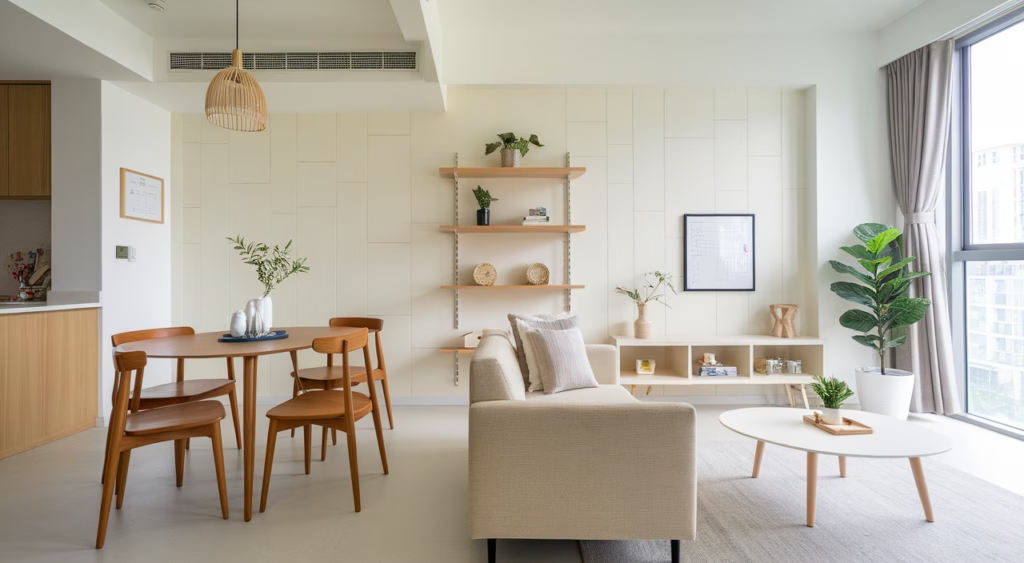
A good HDB learning space does not need a dedicated room: it needs a defined work surface, supportive seating, usable light, controlled visual distractions and storage the learner can reset independently. In a compact flat, a dining corner, bedroom wall or part of the living room can work when the layout supports both focused lessons and normal family life.
This guide covers HDB study room design for homework, online lessons and home-based learning. “Home-based learning” is not the same as formal home-schooling. Singapore Citizen children of compulsory school age generally must attend a national primary school unless an exemption is granted; parents considering home-schooling should check the Ministry of Education’s current compulsory-education guidance.
Choose the location by activity
Start with the learner’s actual routine. Younger children may benefit from a visible corner near an adult, while older learners may need stronger acoustic and visual separation. Put messy craft work near an easy-clean surface, and reserve the quietest position for reading, writing and calls.
Before buying furniture, test the location at the times it will be used. Check glare, traffic paths, television noise, cooking activity and whether a video call would expose private areas of the home. A workable location lets another person pass without pushing the learner’s chair or crossing the camera view.
Use a compact layout that can reset quickly
Single-wall study zone
A shallow desk against a wall is the simplest solution. Use vertical storage above or beside it, but keep heavy items in stable, reachable cabinets. A pinboard or narrow rail can hold the current timetable without covering the whole wall.
Shared sibling desk
A long worktop can be divided into two clear stations. Give each learner separate drawers, charging access and task lighting. If simultaneous calls are common, plan a second call location rather than expecting a thin screen to provide sound isolation.
Convertible living or dining area
When the table serves several purposes, store learning materials in a nearby mobile drawer or labelled box. The goal is a short setup and reset routine. Avoid permanent stacks that turn a shared room into an unfinished classroom.
Get desk, chair and screen relationships right
Choose furniture for the person using it, not merely the available wall width. The learner should be able to sit with supported feet and relaxed shoulders while using the work surface. For children who are still growing, adjustability or a stable foot support can extend the useful life of the setup.
Place frequently used materials within easy reach so the learner does not twist or leave the chair repeatedly. For screen work, position the display to avoid obvious window reflections and leave enough depth for a comfortable viewing distance. A separate keyboard can make a laptop setup easier to adjust, but the arrangement should stay simple enough to pack away when necessary.
Layer daylight and electric light
Daylight is useful, but a desk directly facing strong sunlight can create glare. A position perpendicular to a window often makes brightness easier to control. Add an adjustable task light that illuminates books without shining into the learner’s eyes or screen.
Plan sockets and cable routes before ordering fixed carpentry. Extension leads across walkways are a trip risk and make daily reset harder. Electrical alterations should be carried out by an appropriate qualified worker. Review HDB’s dedicated electrical-work renovation guidelines and engage a licensed electrical worker for electrical work.
Reduce distraction without overbuilding
Visual separation can come from furniture placement, a curtain, an open shelf or a change in wall colour. These devices define a zone but do not make it soundproof. For calls, soft furnishings and closing a door may reduce reflections, while household scheduling is often more effective than a decorative partition.
Keep the active work area intentionally sparse: current books, stationery and one task list. Store archives, craft supplies and seldom-used equipment elsewhere. Labelling storage by activity is clearer than using broad categories such as “school things”.
Plan built-ins around HDB constraints
Fixed carpentry should not obstruct windows, ventilation, service access, distribution boards or air-conditioning maintenance. Confirm wall construction and services before drilling. If the plan includes moving walls, changing openings or other building work, review the exact proposal against HDB’s building-work renovation guidelines and obtain approval where required.
Prefer adaptable elements when the learner’s needs may change. A movable pedestal, adjustable shelf and freestanding desk can be reconfigured more easily than a highly specialised built-in. Reserve permanent carpentry for storage or surfaces that will remain useful beyond the current school stage.
Design a realistic daily workflow
- Set up the desk with only materials for the next session.
- Put the timetable and charging routine in one visible location.
- Use a consistent place for completed work and items needing adult review.
- End with a five-minute reset so the next session starts clear.
- Review the layout after several weeks and move furniture before commissioning new built-ins.
Frequently asked questions
Do I need a separate room for an HDB study area?
No. A clearly defined corner can work if it has a suitable surface, supportive seating, lighting, storage and reasonable control of household distractions.
Where should a study desk face?
Choose a position with low glare and manageable distractions. Placing the desk perpendicular to a window often controls daylight better than facing directly into or away from strong sun.
How can siblings share one HDB study space?
Give each learner a defined station, separate storage, charging access and task lighting. Plan a second location when both need voice or video calls at the same time.
Are partitions necessary for a study corner?
No. Furniture placement, a curtain or open shelving can define the zone. These provide visual separation, not true soundproofing, so household routines still matter.
Should I build a fixed study desk?
Use a fixed desk only when the dimensions and long-term use are clear. Freestanding or adjustable furniture is easier to adapt as children grow and room functions change.